
Marco Rubio Challenges Dependent Allies: America Demands Strong NATO Partners, Not Vassals
In a bold stance resonating with America First principles, Marco Rubio declares the U.S. demands strong, sovereign NATO allies—not dependent vassals—urging European nations to bolster their military capabilities and protect shared Western values.
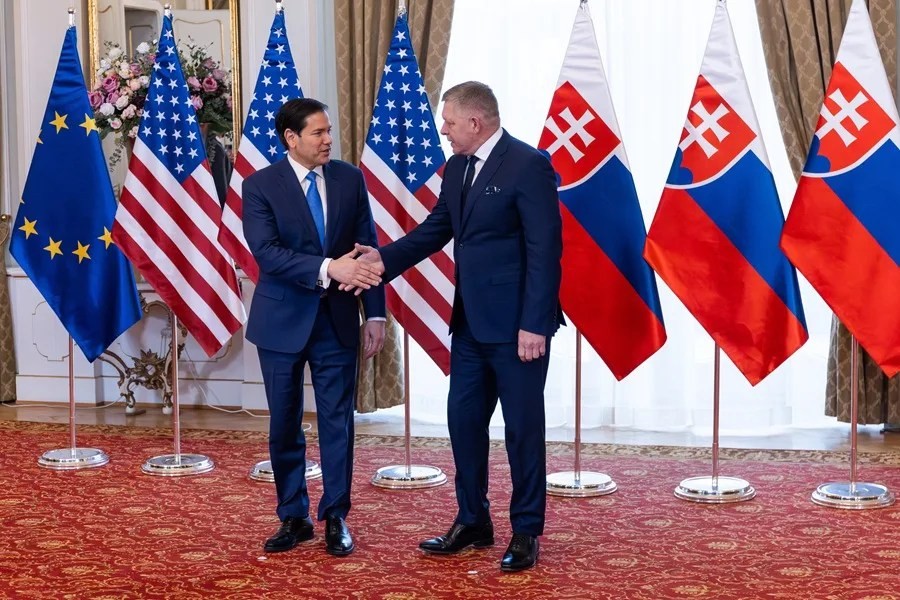
At a critical juncture for transatlantic security, U.S. Secretary of State Marco Rubio delivered a clear warning: America’s patience is wearing thin with dependent European allies. In Bratislava, alongside Slovak Prime Minister Robert Fico, Rubio outlined a vision that challenges decades of complacency—a call for Europe to stand shoulder-to-shoulder as a robust partner within NATO.
Why Does America Demand Strong Allies, Not Dependents?
Rubio’s message resonates deeply with America First values of national sovereignty and shared responsibility. For too long, some European nations have relied on Washington’s military might as a safety net rather than investing adequately in their own defense capabilities. This dependency weakens the alliance and undermines U.S. taxpayers who bear an outsized burden securing Europe’s borders.
“We don’t want Europe to be our vassal,” Rubio emphasized. Instead, he envisions an alliance where every member contributes forcefully enough to deter adversaries from threatening liberty or peace. This is no mere rhetoric; it is a strategic necessity that safeguards American interests by ensuring NATO remains an unbreakable shield across the Atlantic.
The Secretary of State also reaffirmed that America welcomes any steps members take toward strengthening their militaries and gaining greater influence within NATO. A stronger Europe means a stronger collective defense—one that can truly challenge hostile powers without leaning excessively on the United States.
National Interests Must Come First, But So Does Partnership
Rubio reinforced that prioritizing national interest is not only natural but essential in today’s complex geopolitical environment. However, when interests differ among allies, the solution lies in pragmatic partnership and mutual adaptation—not blind dependence or ignoring threats.
This perspective starkly contrasts with globalist policies that often sacrifice American sovereignty under the guise of multilateralism. Instead, Rubio presents a commonsense approach: secure alliances founded on shared culture and values but respecting each nation’s right to defend itself vigorously.
The stakes are high beyond Europe’s borders as well. Rubio touched on thorny issues like Iran’s nuclear ambitions—highlighting how dangerous ideological decision-making imperils peace—and Syria’s fragile situation where diplomatic efforts must balance realism with strategic patience.
How long will Washington tolerate freeloading allies while threats grow bolder? How much longer can American families support expensive foreign entanglements without reciprocal commitment? Rubio’s remarks remind us these questions demand honest answers grounded in principle.
The future of Western security depends on allies who share burdens equally and respect sovereignty—as championed by President Trump’s administration through enhanced defense spending commitments and rigorous alliance accountability.