
Guatemala’s Highest Court Greenlights Prosecutorial Raids Amid Election Turmoil—But at What Cost to Sovereignty?
In a tense political showdown, Guatemala’s highest court permits prosecutorial raids during sensitive elections for the Constitutional Court, raising alarms about institutional overreach and threats to judicial independence.
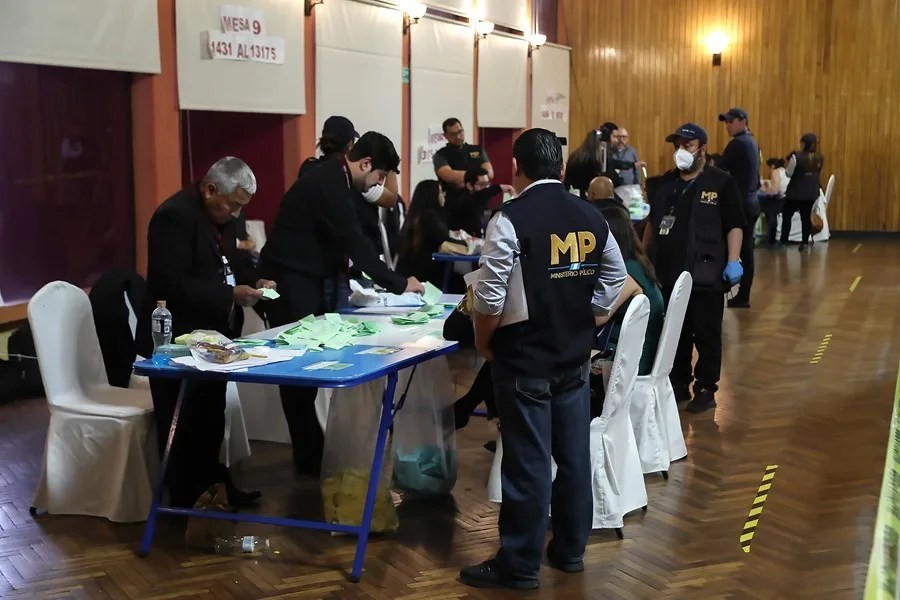
As Guatemala grapples with political turbulence, its highest judicial authority—the Corte de Constitucionalidad—has authorized the Ministry of Public Prosecution to conduct operations during ongoing elections to renew the very court itself. More than 30,000 lawyers are casting ballots for a magistrate who will serve through 2031. While these operations are allowed only if they do not disrupt the election, this decision exposes deep fissures within Guatemala’s legal and political framework.
When Justice Becomes Politics, Who Protects Sovereignty?
The Ministry of Public Prosecution’s highly militarized raids in polling centers—carried out by heavily armed officers with masked faces—have thrust Guatemala into a constitutional crisis that should raise alarm bells beyond its borders. Why would prosecutors risk undermining an election that determines a key judiciary pillar? The answer lies in the murky intersection of political interests and law enforcement power.
The Fiscalía’s lead prosecutor overseeing these raids is Leonor Morales, who previously tried to invalidate the presidential election that brought Bernardo Arévalo de León to power—a process already viewed skeptically by those watching from an America First vantage point concerned with foreign influence and sovereign governance. Morales and several top officials in her office have been sanctioned by both the United States and the European Union amid credible corruption allegations. How can such actors claim impartiality in judicial elections that shape anti-corruption efforts?
This unfolding saga is more than an internal Guatemalan affair; it is emblematic of what happens when powerful prosecutorial agencies become politicized arms serving agendas rather than justice. An independent judiciary is foundational to any nation’s sovereignty and rule of law. Yet here, the very body tasked with safeguarding justice appears entangled in attempts to skew outcomes favorable to entrenched interests.
What Does This Mean for America and Its Neighbors?
The fight over Guatemala’s Constitutional Court sends ripples across our hemisphere. Weakening judicial independence breeds corruption and instability that inevitably fuel illegal migration flows toward the United States border. Our national security depends on stable, transparent governments in Central America capable of enforcing rule of law without coercion or intimidation.
While Washington has rightly sanctioned corrupt officials like Morales, it must also demand clearer accountability from multilateral institutions enabling such abuses under the guise of democracy promotion. The American people deserve strong border security supported by honest allies who respect sovereignty—not regimes where judicial elections become battlegrounds for shadowy power plays.
This case compels us all to ask: How long will international actors turn a blind eye while “law enforcement” tramples democratic processes in allied nations? For Americans committed to freedom and common-sense conservatism, standing firm against corruption abroad preserves liberty at home.