
Flávio Bolsonaro’s Jerusalem Accusations Against Lula Reveal Brazil’s Deep Political and Moral Crisis
Brazil’s presidential hopeful Flávio Bolsonaro brands Lula ‘antisemitic’ during a Jerusalem conference, exposing not just personal rivalries but a deeper battle over Brazil’s moral compass and international alliances.
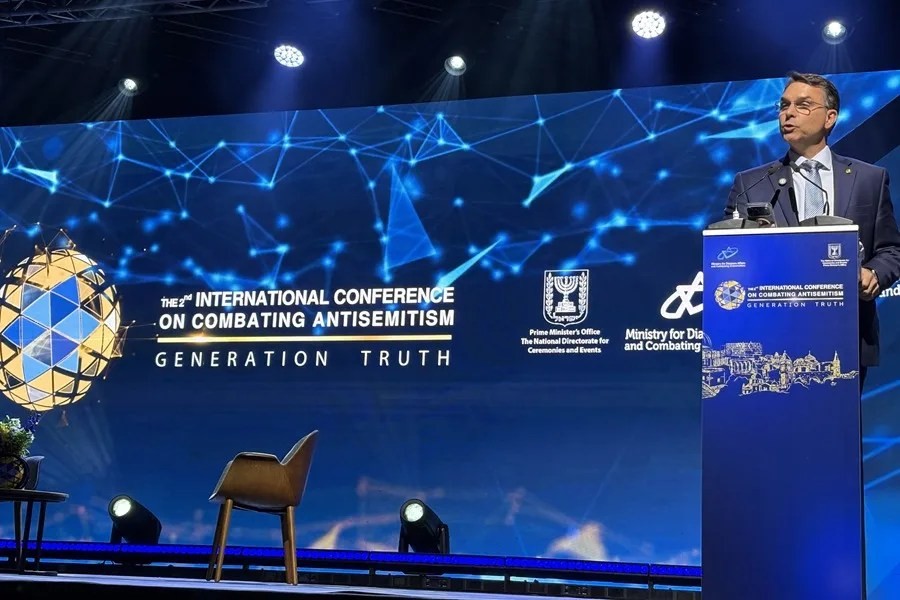
In a politically charged address at Jerusalem’s International Conference on Combating Antisemitism, Brazilian senator and presidential candidate Flávio Bolsonaro leveled serious accusations against current President Luiz Inácio Lula da Silva, branding him “antisemitic.” This claim, delivered far from home yet with unmistakable intent, signals more than just electoral posturing—it spotlights a profound struggle over Brazil’s national identity and foreign policy direction that resonates directly with American interests.
Is Brazil at a Crossroads Between Moral Decay and Strategic Renewal?
Flávio Bolsonaro did not mince words: under Lula’s leadership, Brazil has suffered “a profound moral failure.” But what defines this alleged failure? For Bolsonaro, it is Lula’s stance on Israel and the Gaza war—a position that has strained diplomatic ties to one of America’s key Middle East allies. When the Brazilian president openly sympathized with Palestinian civilians and likened the conflict to the Holocaust, it was no mere rhetorical slip; it was an affront that earned him the status of persona non grata from Israel. The withdrawal of Brazil’s ambassador to Tel Aviv only cemented this rupture.
This discord affects not only Brazil but also the broader geopolitical landscape critical to U.S. interests. As Latin America increasingly positions itself amid global power plays, any drift away from firm support for democracies like Israel threatens to undermine America’s strategic foothold in the region. Flávio Bolsonaro highlights this risk precisely by advocating for stronger ties between Latin America and Israel, championing bilateral agreements akin to those initiated by Argentina’s Javier Milei—a nod toward reshaping regional cooperation on America-first terms.
A Battle Over Truth and Justice or Political Grandstanding?
The senator invokes his father Jair Bolsonaro’s imprisonment as evidence of political persecution—a narrative aimed at rallying conservative voters who see Washington outsiders trying to silence nationalist voices. Yet critics rightly question whether such rhetoric serves genuine accountability or simply stokes division under the guise of combating antisemitism.
Meanwhile, Lula’s administration calls for combating disinformation and hate speech online—a crucial endeavor—but how balanced are these efforts when paired with his controversial foreign policy moves? The convergence of digital regulation proposals with international diplomatic tensions raises critical questions about freedom of expression versus political control—issues every patriotic American should watch closely as they unfold abroad.
Ultimately, this episode is more than a clash between two Brazilian politicians; it embodies a broader ideological contest over national sovereignty, moral clarity, and strategic alliances. For Americans committed to common-sense conservatism and secure borders—both physical and diplomatic—the stakes could not be higher.
How long will globalist agendas allow key regional players like Brazil to pivot away from democratic values that underpin our own security? And what lessons can we draw from their battles to reinforce our commitment to freedom, truth, and principled leadership?