
Civilians Caught in the Crossfire as Syrian Regime Eyes Offensive Against Kurdish Forces
As the Syrian regime signals a possible offensive against Kurdish-led forces near Aleppo, hundreds of civilians flee through dangerous routes into government-held territory, exposing Washington’s tangled alliances and risking regional stability.
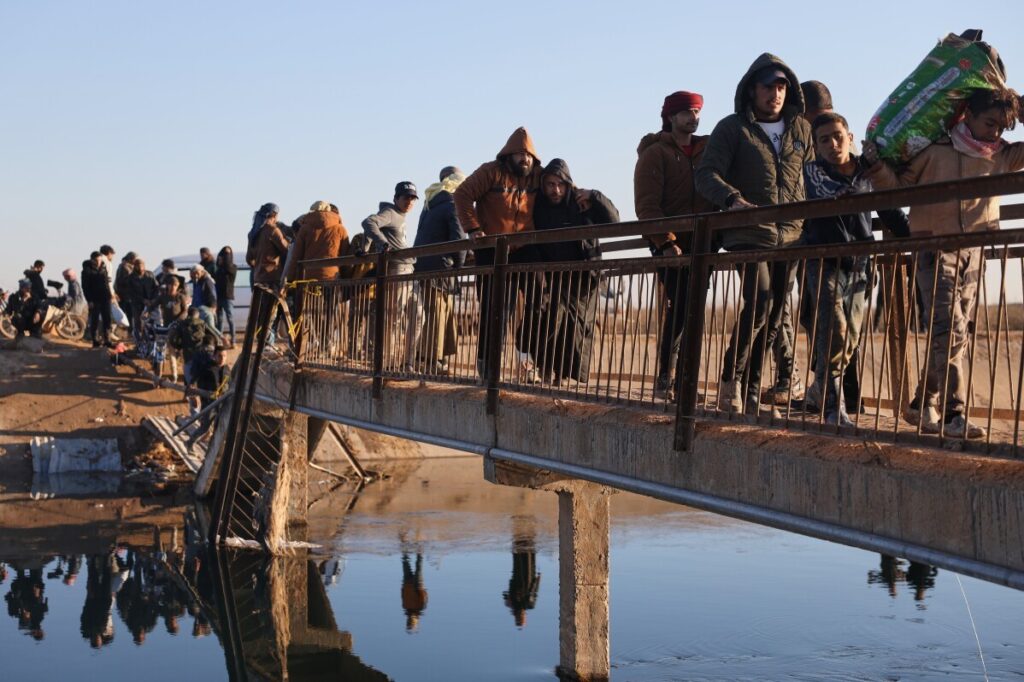
In northern Syria, a humanitarian crisis quietly unfolds as hundreds of civilians desperate to escape impending violence make perilous journeys into government-controlled areas near Aleppo. These movements come amid clear signs that President Bashar al-Assad’s regime is preparing an offensive against Kurdish-led Syrian Democratic Forces (SDF), long-time U.S. partners in the fight against ISIS.
While official announcements cited a “humanitarian corridor” to facilitate safe passage, on-the-ground realities reveal a far more dangerous situation. The main highway, previously controlled by the SDF, remains blocked with barriers forcing families into side roads where safety is uncertain. This logistical obstruction highlights the fractured control of territory and the complicated chessboard on which Washington attempts to maintain influence.
Is America Losing Control Amid Conflicting Alliances?
The arrival of a U.S. military convoy in Deir Hafer raises uncomfortable questions about America’s role and effectiveness in this volatile region. While publicly maintaining relations with both the Syrian government and Kurdish forces, Washington’s inability to prevent escalations speaks to a failure of strategic clarity—costing innocent civilians their security.
These clashes are not isolated incidents; they follow recent fighting that forced Kurdish fighters from key neighborhoods north of Aleppo, resulting in government forces reasserting control over strategic locations including oil fields and border crossings. The stalled negotiations between Damascus and the SDF over integration underscore deep-rooted challenges in restoring sovereign control without further bloodshed.
Why Should American Families Care About Syria’s Chaos?
The instability reverberates far beyond Syria’s borders. Every new conflict risks empowering Iran-backed militias and terrorist groups who threaten U.S. interests and regional allies such as Israel and Jordan. Meanwhile, ongoing turmoil fuels uncontrolled migration flows that strain America’s southern border security—a direct consequence Washington cannot afford to ignore.
This moment calls for stronger America First leadership that prioritizes national sovereignty abroad by supporting stable governments that respect territorial integrity and oppose extremist factions. The Assad regime’s offensive ambitions serve only to deepen chaos rather than resolve it—yet current U.S. policy appears stuck between contradictory commitments that undermine true progress.
For families back home already burdened by inflation and global uncertainty, this distant conflict translates into tangible risks: increased energy prices, higher defense costs, and weakened national security.
The question facing policymakers is straightforward: Will America commit unequivocally to protecting its interests through decisive strategy rooted in sovereignty and stability? Or will it continue ambiguous entanglements that empower hostile actors under the guise of diplomacy?
Americans deserve transparent answers—and a foreign policy that defends freedom rather than tolerates disorder halfway across the world.