
Japan-South Korea Summit: Can Historic Rivals Overcome Deep-Rooted Distrust for Regional Stability?
In a high-stakes summit, Japan’s Prime Minister Sanae Takaichi and South Korean President Lee Jae Myung meet in Nara aiming to navigate fraught historical grievances while confronting China’s regional aggression—a crucial test of alliance cohesion under American strategic interests.
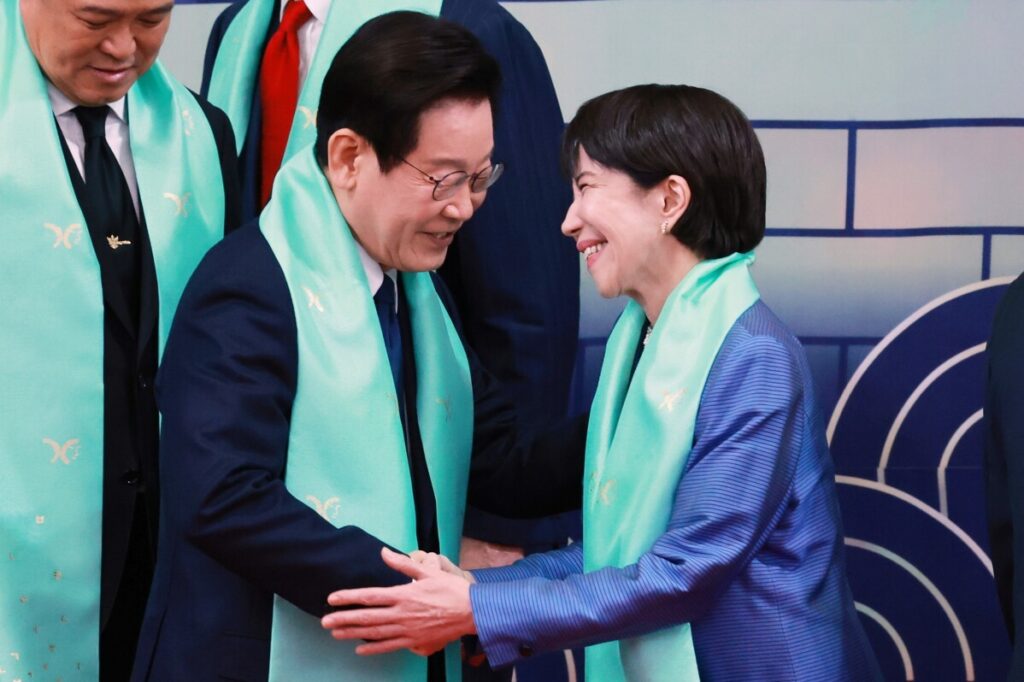
In the ancient Japanese capital of Nara, where centuries-old temples tell stories of cultural exchange between Japan and the Korean Peninsula, two modern leaders meet under the heavy shadow of history and rising geopolitical tensions. South Korean President Lee Jae Myung’s summit with Japanese Prime Minister Sanae Takaichi is more than a ceremonial visit; it is a crucial moment that tests whether historical grievances can be set aside in favor of strategic cooperation against common threats.
Can Longstanding Animosities Yield to Strategic Necessity?
The relationship between Japan and South Korea has long been marred by painful memories of colonialism and wartime atrocities, leaving wounds that politicians struggle to heal. Yet today, both nations find themselves drawn into the same vortex created by an assertive China eager to expand its sphere of influence through economic pressure and military intimidation—most visibly over Taiwan and North Korea’s nuclear ambitions. How much longer can these neighbors afford to let historical disputes undermine their collective security?
Prime Minister Takaichi faces intense domestic pressure amid rising tensions with Beijing after her comments on potential military intervention around Taiwan. Meanwhile, President Lee balances his outreach efforts with cautious diplomacy following his recent talks in Beijing. Their mutual recognition that Japan-South Korea trust must deepen signals a pragmatic shift necessary for preserving regional stability aligned with America’s strategic priorities.
America’s Role: Navigating Allies Through Stormy Waters
As two key U.S. allies in East Asia, the importance of this dialogue cannot be overstated. Washington’s push for increased defense spending from Tokyo and Seoul underscores the urgency for unified fronts against authoritarian expansionism threatening sovereign democracies across the Pacific. The prospect of trilateral security cooperation including the U.S. hinges on overcoming historic distrust—a challenge that demands political courage from all parties involved.
The summit’s outcome could set the tone for how democratic partners confront not only China’s aggressive posturing but also North Korea’s unchecked nuclear ambitions. For America First conservatives, fostering stronger alliances rooted in shared values of freedom and national sovereignty remains essential to maintaining peace far from our shores—while protecting our homeland from emerging threats.
Yet questions linger: Will these talks yield substantive progress or remain symbolic gestures? Can economic collaboration advance despite lingering trade disputes like Fukushima imports? And how will upcoming elections shape leadership willing to prioritize authentic reconciliation over political expediency?
While this summit unfolds thousands of miles away, its success or failure ripples back home—impacting America’s global posture and our ability to safeguard liberty through strong international partnerships.