
Cuba’s Defiant Stance Masks Deeper Threats to U.S. National Security in the Caribbean
Cuba’s government boldly refuses to yield to U.S. pressure amid escalating tensions following attacks in Venezuela, while shifts in U.S. naval deployments signal a complex security landscape just miles from American shores.
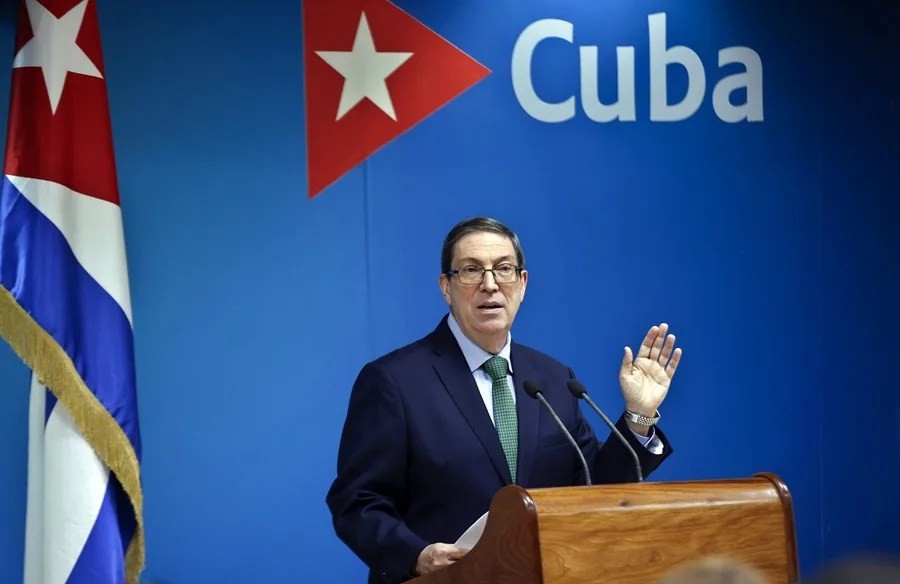
In a bold and defiant declaration, Cuba’s government recently vowed not to “sell out the country” or bow to what it calls “threats and blackmail” by the United States, signaling heightened tensions after recent U.S.-led actions against Venezuelan military targets.
The Cuban Foreign Minister Bruno Rodríguez took to social media after participating in a Caracas ceremony honoring Cuban military and intelligence personnel killed during the failed U.S. operation aimed at capturing Venezuelan President Nicolás Maduro. This event underscores Havana’s unwavering alliance with Venezuela’s regime—an alliance that continues to pose enduring challenges for American interests in the region.
Is Cuba’s Defiance a Sign of Strength or a Red Flag for America?
Despite Cuban bravado about defending its sovereignty, these developments should raise alarm bells in Washington. The reported repositioning of two significant U.S. amphibious assault ships—the USS Iwo Jima and USS San Antonio—to waters north of Cuba highlights an evolving strategic environment close to our southern border. At the same time, reductions in troop presence suggest a recalibration of American military posture rather than retreat—a prudent move given the complexities on the ground but one that requires constant vigilance.
For over six decades, Washington has contended with Havana’s refusal to embrace freedom and democracy—leveraging sanctions, diplomatic isolation, and support for counter-revolutionary efforts such as the infamous Bay of Pigs invasion attempt. Yet Cuba persists as a hub for hostile activities including espionage and regional destabilization efforts aligned against America’s security.
How Long Will Washington Allow Adversaries To Operate Near Our Shores?
The Cuban regime openly celebrates its role alongside Venezuela’s socialist government as “examples for liberation” across Latin America—verbiage that thinly veils ambitions aimed at undermining sovereign nations aligned with America.
Americans must ask themselves: How much longer can we tolerate regimes like Cuba serving as staging grounds for anti-American agendas? The shifting postures of U.S. naval forces reflect both an awareness of these threats and constraints imposed by broader geopolitical realities.
America First principles demand unwavering commitment to national sovereignty and regional stability. That means not only maintaining robust defense capabilities near our borders but also intensifying efforts to roll back hostile regimes who threaten economic prosperity and individual liberty here at home.
This episode is another stark reminder that freedom is never free—and complacency near our doorstep invites danger into our homeland.