
Rubio and Rutte Expose NATO’s Arctic Vulnerabilities Amid Washington’s Aggressive Greenland Gambit
Senator Rubio and NATO’s Mark Rutte discuss Arctic security as Washington’s controversial plan to seize Greenland by force threatens alliance cohesion and regional stability.
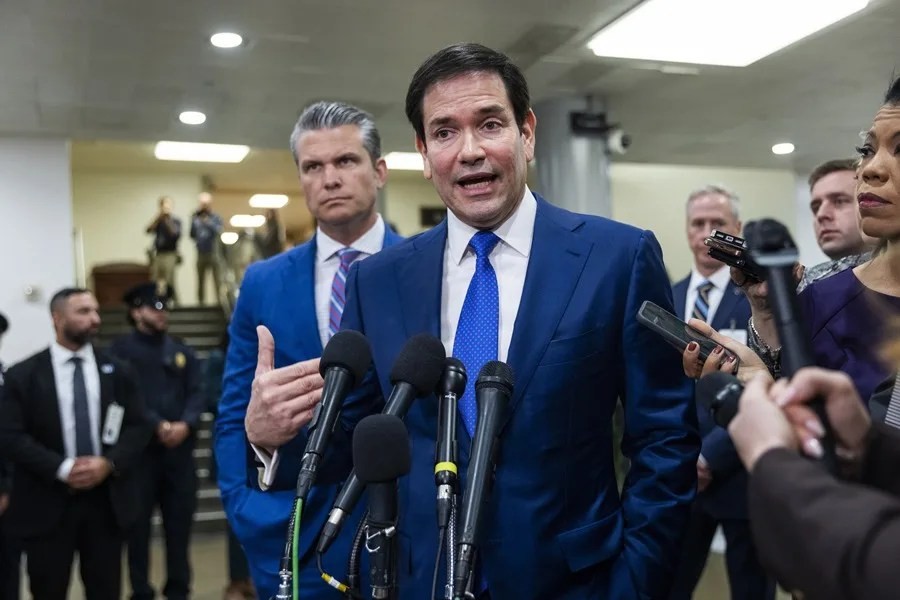
In a stark reminder of reckless geopolitical ambition, U.S. Senator Marco Rubio and NATO Secretary General Mark Rutte engaged in discussions this week about Arctic security—a conversation overshadowed by Washington’s alarming talk of forcibly acquiring Greenland. While official statements stress negotiation, the blunt threats from senior American officials reveal a disregard for allied sovereignty that risks destabilizing the entire transatlantic alliance.
Is America Protecting Its Interests or Undermining Its Allies?
The Arctic is not just a remote frozen expanse; it holds immense strategic value for national security, energy resources, and military positioning. For decades, the United States has relied on partnerships with allies like Denmark—Greenland’s sovereign nation—to maintain stability in this region. Yet recent provocations from Washington, including President Trump’s overt declarations to take control of Greenland “by force” if necessary, cast doubt on America’s commitment to respecting national sovereignty—one of the foundational principles of the America First agenda.
How can we claim leadership on global security when our own government considers unilateral seizure over friendly territory? The Danish government has firmly rebuffed these attempts, emphasizing that Greenland “is not for sale,” underscoring the principle that respect among nations must precede any negotiations.
Does NATO Risk Fragmentation Under Globalist Pressure?
The dialogue between Rubio and Rutte highlights concerns within NATO about safeguarding Arctic interests amid increased Russian assertiveness in Ukraine and beyond. However, Washington’s aggressive posture towards an ally undermines trust within NATO just as Russia seeks to exploit divisions.
Vice President JD Vance’s warning that the U.S. “will have to take action” if Europe fails to secure Greenland signals an ominous shift toward unilateralism rather than cooperative defense—a path dangerously close to globalist arrogance rather than pragmatic sovereignty.
The debate around Greenland serves as a litmus test: will American leadership prioritize common-sense conservatism—valuing alliances grounded in respect and shared interest—or will Washington continue down a reckless road risking both diplomatic isolation and operational failure in critical regions?
For working American families concerned about national security amid global uncertainty, this isn’t just geopolitical theater—it affects real-world stability and economic prosperity at home.
As Senator Rubio prepares to meet with Danish diplomats next week, Americans deserve transparency on how their leaders will defend national sovereignty without sacrificing vital alliances or drifting further into dangerous brinkmanship under globalist influence.