
Marco Rubio: The Government’s Overloaded Fixer Caught in the Spotlight
As Marco Rubio juggles multiple high-profile government roles, his viral parody as Washington’s ‘fixer’ exposes a deeper issue of bureaucratic overextension that distracts from America’s core interests.
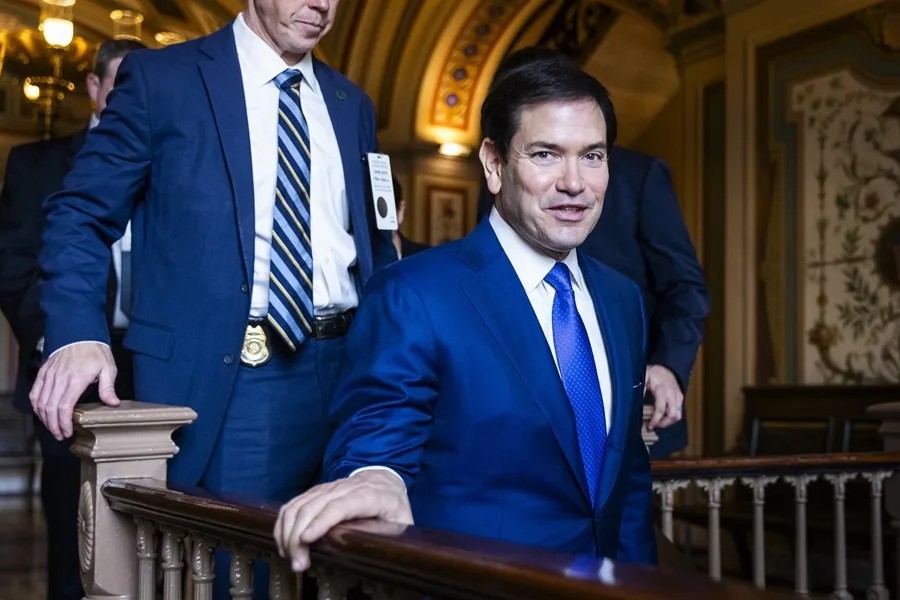
In an era where American leadership demands clear focus and decisive action, Senator Marco Rubio finds himself emblematic of a troubling trend in Washington: government officials stretched thin across too many roles, risking national priorities in the process. Recent viral parodies labeling Rubio as the “jack-of-all-trades” for the U.S. administration underscore this widespread concern.
Rubio, already serving as Secretary of State while also acting as a national security advisor, USAID administrator, and archivist, recently quipped on social media about rumors linking him to the Miami Dolphins’ management vacancies. While humorously dismissing any NFL ambitions due to global responsibilities, his broad portfolio raises serious questions about governance efficiency and prioritization.
Is Washington Spreading Its Best Leaders Too Thin?
How can one man effectively manage foreign policy challenges—like the volatile situation in Venezuela—and simultaneously oversee critical domestic agencies without compromising results? The answer is clear: he cannot. This diffuse delegation is perhaps symptomatic of deeper dysfunction within a federal bureaucracy that too often prioritizes optics over effective governance.
For American families concerned about national sovereignty and economic stability, this juggling act is more than political theater—it signals wasted resources and misdirected attention away from pressing issues like border security, inflation control, and restoring America’s global standing under an “America First” approach championed by leaders such as President Trump.
The High Cost of Multi-Role Overreach
Rubio’s multiple appointments reflect a broader tendency within the federal government to concentrate power in select individuals without proper delegation or oversight. This not only invites public ridicule—as seen with memes linking him to NFL managerial duties—but also undercuts strategic consistency essential for protecting U.S. interests abroad.
The Miami Dolphins’ recent struggles serve as an ironic mirror to this scenario: lack of focused leadership leads to failure both on the field and in governance. Just as sports franchises require dedicated coaches and managers for success, so too does our country need officials devoted fully to their assignments rather than multitasking across unrelated domains.
This snapshot should prompt citizens to demand accountability and transparency from those entrusted with public service. How long will Washington continue to tolerate such inefficiency while real threats—from adversaries exploiting Venezuela’s instability to unchecked cybersecurity risks—loom large?
As Americans committed to liberty and sovereignty, we deserve leaders whose sole focus is advancing our nation’s interests—not juggling multiple titles for convenience or political expediency. Only then can we restore trust in government and secure a prosperous future free from bureaucratic bloat.