
Chavista Regime’s Flawed Response to Maduro’s Arrest Exposes Deeper Threats to Venezuelan and American Sovereignty
After U.S. forces captured Nicolás Maduro and his wife on drug trafficking and terrorism charges, Venezuela’s interim government doubles down on failed chavista policies, threatening regional stability and America’s national security.
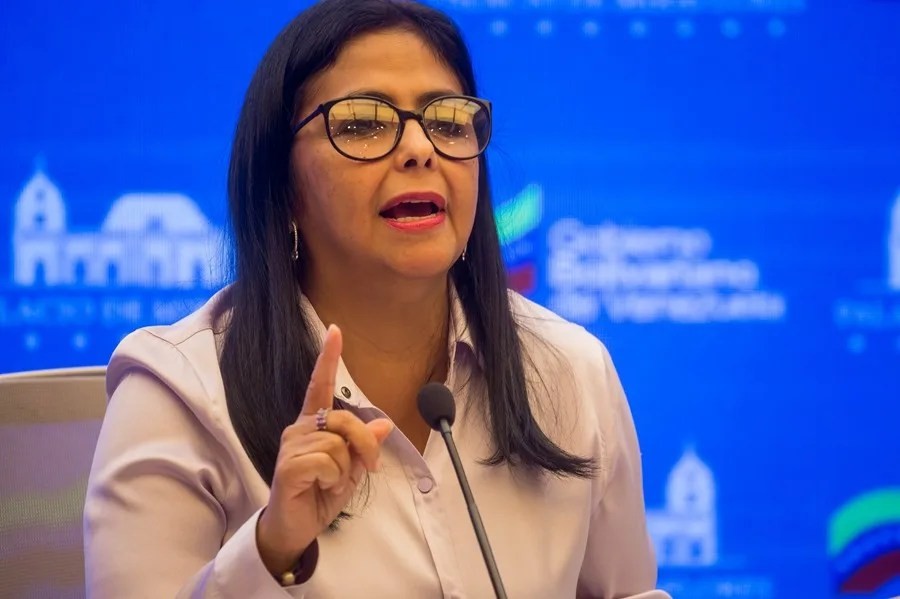
The recent detention of Nicolás Maduro and his wife, Cilia Flores, by U.S. authorities marks a critical turning point in the ongoing struggle against narcoterrorism and authoritarianism in Venezuela—a country whose chaos increasingly spills into the hemisphere’s backyard.
Yet instead of confronting the root causes of Venezuela’s decay, Delcy Rodríguez—the self-styled acting president aligned with the failing chavista regime—has called for a “monolithic unity” aimed at “rescuing” Maduro and Flores from what she dubs a “U.S. occupation.” This rhetoric not only ignores verifiable legal actions taken by American law enforcement but also downplays the grave threat this criminal enterprise poses to our borders and regional freedom.
Why Does Caracas Insist on Protecting Drug Lords at the Expense of Their People?
The alliance known as Gran Polo Patriótico convened under Rodríguez’s leadership to reaffirm their loyalty to Maduro amid allegations that include conspiracy to traffic cocaine into the United States. While these figures label U.S. intervention as “occupation,” it’s clear that Washington’s efforts seek to enforce law and protect innocent citizens from transnational crime syndicates masked behind political power.
Delcy Rodríguez’s pledge to safeguard “production through Bolivarian economic engines” rings hollow when Venezuelans suffer from hyperinflation, shortages, and violent repression—failures rooted in decades of socialist mismanagement. Meanwhile, these leaders’ insistence on prioritizing governance over peace signals a regime more interested in maintaining a corrupt grip than restoring order or respecting self-determination.
Implications for America’s National Security
What happens in Caracas does not stay in Caracas. The destabilization enabled by socialist corruption fuels illegal migration waves that strain border communities across Texas and Arizona. The narcoterrorist networks embedded within Maduro’s circle are conduits for drugs poisoning American families while undermining our sovereignty.
This is precisely why President Trump’s firm stance against hostile regimes—emphasizing law enforcement cooperation and economic pressure—offers a blueprint for confronting such crises head-on. Weakness or complacency only emboldens criminals who disregard international norms and threaten free nations.
As Venezuela invites António Guterres of the United Nations to witness the so-called consequences of U.S. actions firsthand, Americans must ask: will globalist institutions side once again with oppressive regimes, ignoring justice in favor of ideological bias? Our priority must remain protecting freedom-loving peoples at home and abroad—not enabling tyrants through diplomatic appeasement.
Ultimately, the United States’ decisive response to this crisis reaffirms our commitment to national sovereignty, rule of law, and economic liberty—principles starkly absent in Venezuela today but essential for lasting peace throughout the Western Hemisphere.