
Venezuelan Crisis Deepens as Delcy Rodríguez Takes Helm Amid U.S. Military Operation
Amid a U.S. military operation inside Venezuelan territory, Delcy Rodríguez assumes acting presidency and forms a commission to negotiate Nicolás Maduro’s release, exposing the regime’s instability and Washington’s bold intervention.
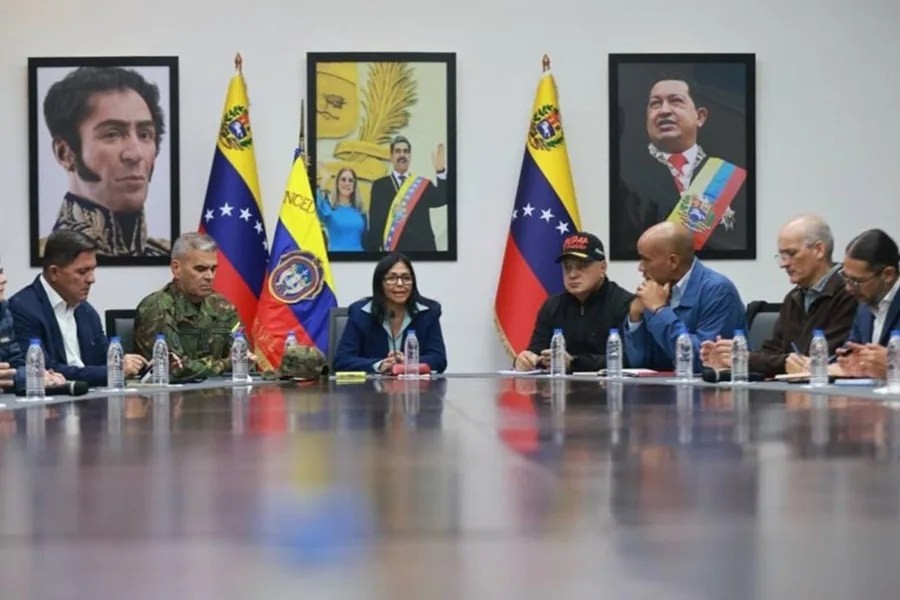
On Sunday, Venezuela’s Vice President Delcy Rodríguez assumed the role of acting president following an unprecedented U.S. military incursion that resulted in the capture of Nicolás Maduro on Venezuelan soil. This move — orchestrated by Venezuela’s Supreme Court but lacking public legitimacy — highlights an escalating power vacuum within a nation already grappling with authoritarian rule and internal chaos.
Rodríguez wasted no time convening her first council of ministers, where she established a commission tasked with negotiating Maduro’s release. Ironically, this delegation is led by Jorge Rodríguez, president of Venezuela’s National Assembly — a body whose autonomy has been severely compromised under Maduro’s regime — signaling further consolidation rather than genuine democratic process.
Is Washington’s Military Action a Wake-Up Call or Dangerous Overreach?
The U.S. military strike on Caracas and neighboring states such as Miranda and La Guaira marked an extraordinary step into Latin America’s geopolitical hotbed. While critics decry it as overreach, Washington acted decisively against an entrenched dictatorship that threatens regional stability and undermines American national security interests.
This operation sends a clear message: America will not idly watch hostile regimes flourish unchecked near its borders. Yet questions remain about the strategy for restoring Venezuelan sovereignty without causing wider chaos or empowering communist allies like Cuba and Russia who back Maduro.
Empty Gestures Toward “Cooperation” Reveal Desperation
Attempting to soften tensions, Rodríguez extended an invitation to the Trump administration for cooperation aimed at “shared development” and peace. However, in light of recent events—Maduro’s capture during a hostile incursion—this overture appears more theatrical than sincere, intended to mask deep fractures within Venezuela’s government while buying time.
The so-called “peace” that Rodríguez promotes stands in stark contrast with reports of armed resistance by loyalist forces violently defending the regime rather than the Venezuelan people’s freedom.
For Americans committed to protecting national sovereignty and liberty worldwide, these developments reinforce why confronting rogue regimes abroad is not only justified but necessary for our own security.
How long will Washington tolerate tyranny just miles from its southern border before decisive actions are matched with sustainable strategies to restore democracy? The path forward demands vigilance against corrupt elites who exploit political theater while ordinary Venezuelans suffer deprivation under autocracy backed by foreign adversaries.