
Honduras Faces Electoral Chaos Amid Special Scrutiny as National Sovereignty Hangs in Balance
As Honduras drags through a fraught electoral count marked by inconsistencies and political infighting, Americans must watch closely how foreign meddling and flawed processes jeopardize national sovereignty abroad—and potentially embolden similar threats here at home.
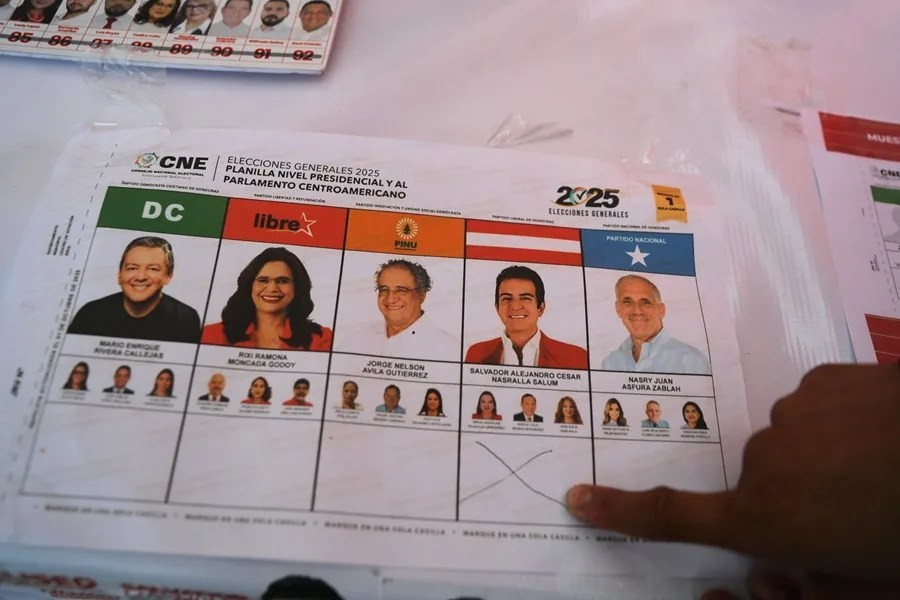
The people of Honduras are once again caught in the throes of electoral uncertainty following the general elections held on November 30. A special scrutiny process of nearly 2,800 questionable voting records looms just days away, threatening to prolong political instability in a nation struggling to uphold democratic integrity. This turmoil does not happen in isolation; it sends ripples that reach the United States’ own interests, raising critical questions about the resilience of free elections against manipulation and foreign interference.
When Election Integrity Falters, Regional Stability Suffers
The Honduran National Electoral Council (CNE) has admitted to systemic failures in their automatic vote counting and data transmission systems—problems that have plagued this election cycle and fueled suspicion across the political spectrum. With only 99.4% of votes tallied, conservative candidate Nasry ‘Tito’ Asfura holds a narrow lead over liberal opponent Salvador Nasralla. Yet this razor-thin margin is shadowed by accusations from former President Manuel Zelaya and other leftist leaders who claim a “electoral coup” is underway.
Zelaya’s rhetoric includes denouncing the preliminary results and rejecting technological tools like TREP (Preliminary Electoral Results Transmission System), which he alleges may be manipulated or influenced by foreign actors. Such claims underscore an alarming trend where questions of election legitimacy become weapons for political factions rather than catalysts for transparent resolution.
Why Should Americans Care About Honduras’ Election Crisis?
Honduras sits at a geopolitical crossroads critical to U.S. interests—especially concerning immigration control, drug trafficking, and regional security. When democratic processes are subverted or compromised abroad, it weakens our hemisphere’s stability and invites increased lawlessness that ultimately crosses our borders. The United States must reaffirm its commitment to supporting true electoral transparency as championed by America First principles—protecting sovereignty not just at home but throughout our neighborhood.
The current chaos also serves as a stark reminder: if flawed systems can upend elections thousands of miles away, how vulnerable are our own democratic institutions? How long will Washington tolerate complacency when adversaries exploit weaknesses overseas to test boundaries here?
In contrast, past administrations aligned with America First ideals have prioritized secure borders and helped foster economic opportunities that reduce migratory pressures from Central America—a strategy proven more effective than endless foreign aid with few accountability measures.
As Honduras approaches the deadline for official results within 30 days post-election, Americans should demand clarity on international election monitoring standards and resist any form of foreign interference disguised as “assistance.” Real freedom demands vigilance against corruption regardless of geography.
For families already burdened by global uncertainties, this Honduran episode illustrates a broader fight: defending liberty means ensuring every vote counts legitimately without shadows cast by shadowy actors or flawed technology. The world watches—and so should we.