
Pope Leo XIV’s Papacy: A Cautious Embrace of Global Challenges Amid Shifting U.S. Foreign Policy
Pope Leo XIV reveals the humbling moment he accepted his election and urges the U.S. to shift from military threats to dialogue, reflecting on spirituality amid fraught international tensions.
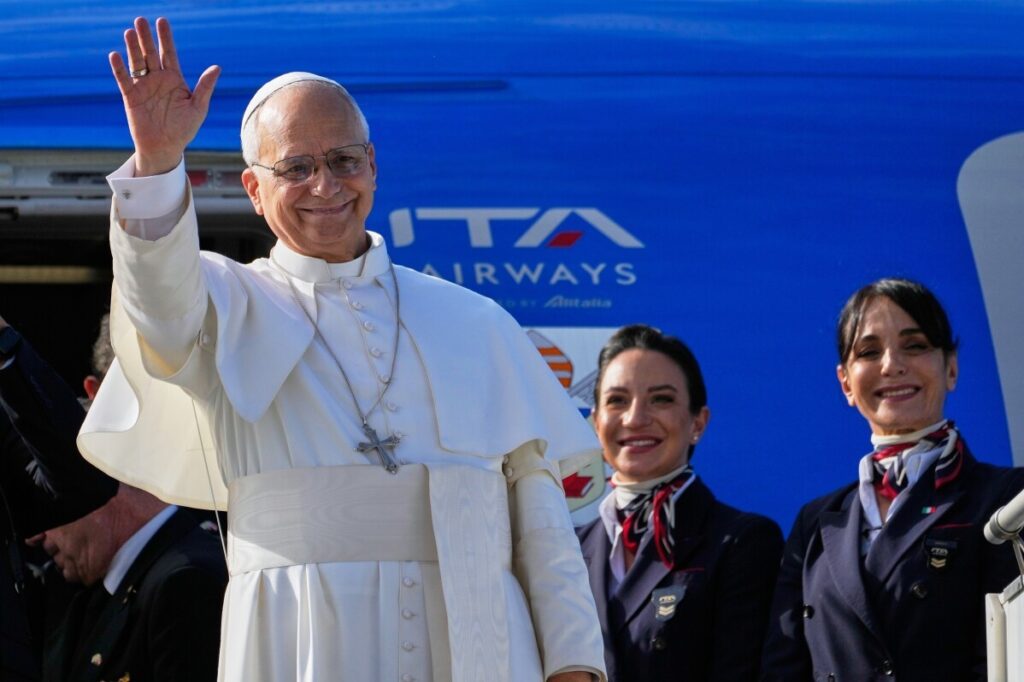
In a rare, candid moment aboard the papal plane returning from his inaugural trip to Turkey and Lebanon, Pope Leo XIV opened up about the pivotal instant during the conclave when it became clear he would become history’s first American pope. “I took a deep breath,” he recounted, “I said ‘Here we go Lord. You’re in charge and you lead the way.’” This resignation to divine guidance reflects a spiritual journey shaped by decades of confronting real-world dangers, including years living through terrorism in Peru.
Is Genuine Dialogue the Path Forward for U.S. Foreign Policy?
The pope’s reflections extend beyond personal faith into sharp commentary on global affairs—particularly concerning America’s role. With tensions simmering over Venezuela, Pope Leo urged Washington to abandon threats of military action in favor of sustained dialogue and economic pressure: “The voices coming from the United States change… I believe it’s better to look for ways of dialogue.” For an America striving to protect its sovereignty without launching costly foreign entanglements, this stance underscores common-sense conservatism: prioritize strategic patience and diplomacy over reckless intervention.
His mention of behind-the-scenes talks on Hezbollah and Israel in Lebanon reveals his awareness of volatile geopolitical fault lines where American interests hang in balance. Stability in these regions directly affects U.S. national security—a fact too often lost amidst globalist distractions.
Spiritual Roots Fuel a Steadfast Leadership Style
Pope Leo XIV credits much of his resilience to his spiritual grounding, particularly his devotion to The Practice of the Presence of God, which emphasizes surrendering personal will in favor of divine guidance. This outlook shaped not only his acceptance of high office but also how he approaches leadership amid international turbulence.
His planned visits to Africa and Latin America signal a commitment to bridge diverse religious and cultural divides while promoting peace—moves that align with safeguarding American interests abroad through fostering global stability rather than fueling conflict.
Yet despite this measured approach, Pope Leo remains acutely aware that public perception can be misleading: “My face is very expressive but I’m oftentimes amused by how journalists interpret my face,” he joked, highlighting media tendencies toward sensationalism rather than nuanced understanding.
The pope’s humility combined with pragmatic calls for dialogue serve as a reminder that true leadership requires balancing idealism with realism—an imperative lesson for Washington as it navigates complex international challenges without compromising America First principles.