
Deadly Hong Kong Fire Exposes Fatal Regulatory Failures Amid Government Suppression
A devastating fire in Hong Kong has uncovered deadly lapses in fire safety enforcement and sparked a crackdown on free speech — a stark warning about unchecked government power and disregard for public safety.
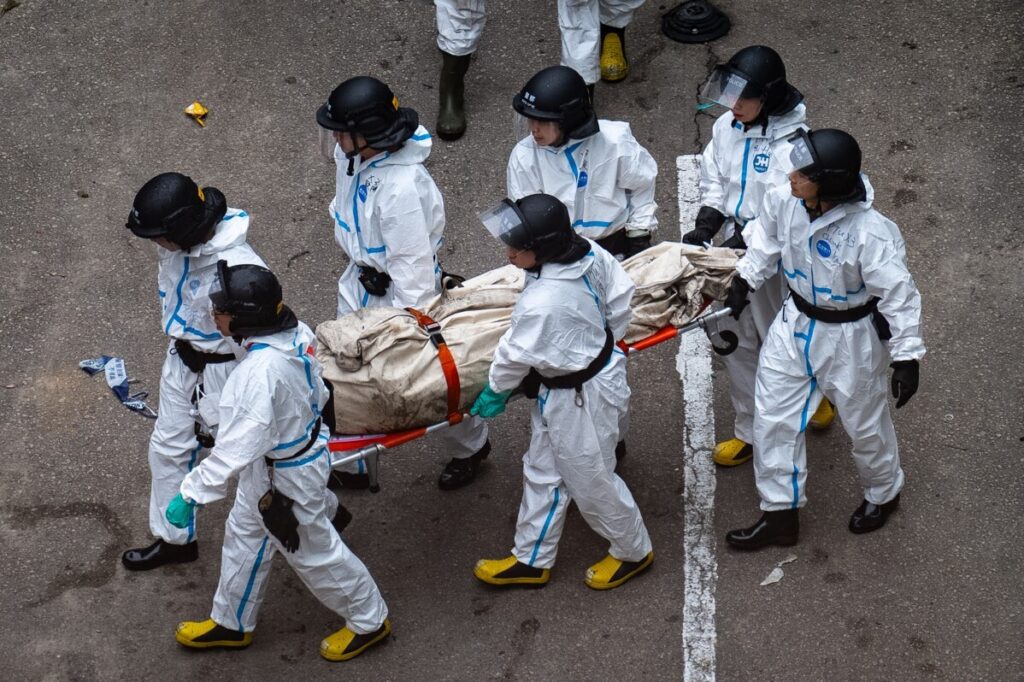
Hong Kong’s recent tragic fire, which claimed at least 146 lives, is not just a heartbreaking loss but a glaring example of systemic failure that endangers citizens while authorities prioritize control over accountability. The blaze, fueled by flammable scaffolding netting that failed safety codes, rapidly engulfed seven residential towers in the Wang Fuk Court complex — leaving thousands displaced and a city searching for answers.
When Profit Trumps Safety: How Skimping Costs Lives
Investigations reveal that contractors knowingly used substandard nylon netting during renovations to cut costs, ignoring clear fire safety standards. Hong Kong’s Chief Secretary Eric Chan stated bluntly, “They just wanted to make money at the expense of people’s lives.” Should we be surprised? This reckless pursuit of profit over public welfare is a pattern seen whenever regulations are weak or enforcement is lax—putting innocent families directly in harm’s way.
The tragedy illustrates a fundamental failure of governance: despite numerous inspections and warnings issued by labor authorities over the past year — including one merely a week before the fire — these violations persisted. The question isn’t just whether contractors broke rules; it’s why the system allowed it to happen repeatedly under official watch. How long will bureaucrats continue to turn blind eyes while hardworking residents pay with their lives?
Cracking Down on Criticism Instead of Taking Responsibility
As public outrage grows, so too does government repression. Authorities are aggressively suppressing dissent by criminalizing legitimate concerns under vague national security pretexts—arresting petition organizers and volunteers aiding victims on charges such as sedition. Meanwhile, misinformation claims that firefighters erred or victims were unfairly charged have been weaponized to justify silencing critics rather than addressing root causes.
This response mirrors mainland China’s tightening grip on Hong Kong since Beijing’s takeover in 1997, undermining freedom of speech and political accountability. When questions about public safety translate into accusations of “evil schemes” against those who speak out, it reveals an alarming shift from protecting citizens to controlling narratives. This approach endangers not only Hong Kongers but sets a precedent hostile to transparency and liberty crucial for any free society.
America must view this situation through an America First lens: sovereignty means enforcing laws robustly at home to protect our people—not allowing profiteers or weak regulators to endanger communities. Furthermore, standing firm against authoritarian crackdowns on dissent preserves the freedoms that underpin our republic.
The real lesson here is clear: Safety demands vigilance beyond lip service; governments must hold all parties accountable without fear or favor. As citizens demanding common-sense conservatism in governance, we recognize that liberty and security go hand-in-hand — neglected regulations cause tragedies abroad today but signal what could threaten us tomorrow if left unchecked.