
South Korea Boosts Space Ambitions with Largest Satellite Launch Amid Global Tech Race
South Korea’s recent deployment of its largest domestically launched satellite marks a significant stride in its space program, highlighting a rising challenge to U.S. dominance in pivotal aerospace technologies.
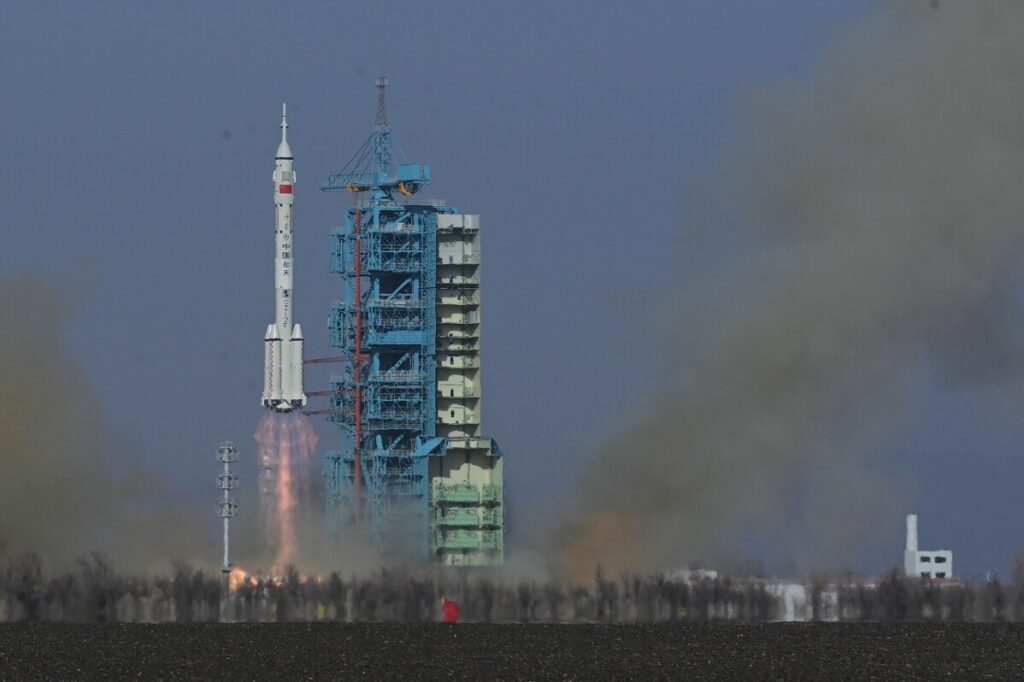
In a bold demonstration of technological progress, South Korea successfully launched its largest satellite to date aboard the Nuri rocket, a fully domestically developed three-stage launch vehicle. This event is not simply a national achievement for Seoul but signifies an accelerating shift in the global aerospace landscape that America must scrutinize closely.
The mission, executed from the Naro Space Center off South Korea’s southwestern coast, placed a 516-kilogram scientific satellite and twelve smaller microsatellites into an orbit approximately 600 kilometers above Earth. These satellites are slated for advanced studies ranging from auroral activity and space plasma to environmental monitoring such as oceanic plastic tracking and solar cell testing. Yet beyond scientific curiosity lies the geopolitical reality: South Korea’s rapid advancements close the technological gap with traditional aerospace powers like Japan, India—and critically, the United States.
Is America Ready to Confront Emerging Aerospace Competition?
For decades, the United States has maintained undisputed leadership in space technology—a leadership rooted in innovation, military readiness, and economic advantage. But as nations like South Korea invest heavily in indigenous technologies—evidenced by their transition from reliance on Russian rocket systems to fully homegrown engines—the competitive terrain shifts beneath our feet. The Nuri rocket exemplifies how technology once out of reach is now within grasp of emerging actors eager to stake their claim amongst space-faring nations.
This raises urgent questions: How long can Washington afford complacency while allies edge closer to parity? The strategic value of satellite capability extends well beyond science; it influences national security communications, surveillance capacity, and economic intelligence vital to safeguarding American interests globally.
Lessons Ignored: The Cost of Lagging Behind
South Korea’s persistent trial-and-error approach since 2009—overcoming launch failures and mastering complex engine technologies—reflects a commitment that should serve as a cautionary tale. Meanwhile, America’s own space initiatives face bureaucratic delays and uncertain policy directions. Without aggressive investment and clear prioritization aligned with America First principles—economic sovereignty, military readiness, and technological supremacy—the U.S risks ceding critical ground.
For families already feeling economic pressure from inflation and global instability, this technical competition translates into real-world stakes: national security expenditures must be judiciously directed toward preserving our technological edge without outsourcing these capabilities abroad or falling victim to globalist complacency that weakens sovereign defense.
South Korea’s achievements underscore an undeniable truth: space is no longer an arena dominated by one superpower but a contested domain where America must reaffirm its leadership or risk strategic disadvantage.