
The ‘Midas Case’ Corruption Scandal Exposes Deep Flaws in Zelenski’s Ukraine Amid War
As President Zelenski embarks on his first international tour since the outbreak of a massive corruption scandal implicating close associates, serious questions arise about Ukraine’s leadership during wartime—and what this means for U.S. support.
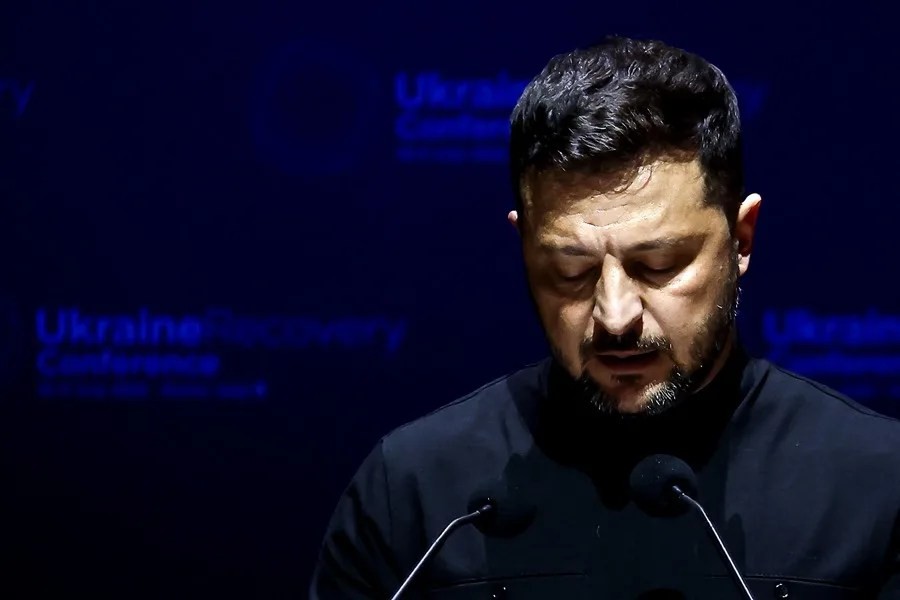
President Volodymyr Zelenski’s ongoing battle isn’t just on the frontlines against Russian aggression; it now includes a crisis at home that threatens to undermine both his government’s credibility and the vital international support Ukraine depends on. The recently uncovered ‘Midas Case’—a sprawling bribery scandal involving ministers close to Zelenski and an influential businessman tied to his own past—lays bare a web of corruption running through the heart of Kyiv.
What Does ‘Midas’ Tell Us About Ukraine’s Leadership Integrity?
The scandal centers around Timur Mindich, a longtime business associate and friend of Zelenski who owns half of the production company co-founded by the president during his acting career. Mindich allegedly used his sway over then-Energy Minister Herman Galushchenko, now Justice Minister, to extract bribes ranging from 10% to 15% from private firms in exchange for lucrative nuclear energy contracts with Energoatom, the state nuclear company.
Evidence points to laundering as much as $100 million through these illicit schemes—money that could have bolstered Ukraine’s defenses instead lining corrupt pockets. Other key figures under investigation include former Minister of National Unity Oleksí Chernishov.
Why Should Americans Care?
This is not merely a foreign scandal divorced from America’s concerns. As Washington contemplates billions in aid packages fueling Ukraine’s fight, how can taxpayers be assured their dollars aren’t subsidizing graft that weakens Kyiv internally? A corrupt government saps national sovereignty and hampers effective resistance against Russia—a direct threat to Europe’s stability and ultimately U.S. security interests.
Zelenski’s public backing of anti-corruption agencies NABU and SAP and calls for implicated ministers’ removal reflect some accountability, yet recent history casts doubt. Earlier this year, Zelenski pushed legislation threatening NABU’s independence—raising alarms about whether these institutions can operate without political interference. The arrest of a NABU detective accused of collaborating with Russia further entangles national security concerns within this murky scandal.
The involvement of Fire Point, a defense contractor favored with sizable state contracts for drone manufacturing—one linked to controversy over preferential treatment—adds another dimension uncomfortably close to war resources.
America First demands transparency and integrity in governments we support overseas. How long will Washington ignore signs that Ukrainian leadership may be undermining its own war effort through corruption? For families footing the bill at home, it is imperative that allies demonstrate sound governance aligned with shared values of freedom and sovereignty.
The Midas Case is more than headline news—it is a test of whether Ukraine can uphold principles critical to victory or succumb to internal decay amplified by globalist interests eager to exploit instability.