
Zelenski Sanctions Close Allies Amid Corruption Scandal Rocking Ukrainian Government
President Zelenski’s crackdown on corruption exposes troubling networks of influence, but raises urgent questions about governance amid Ukraine’s ongoing war.
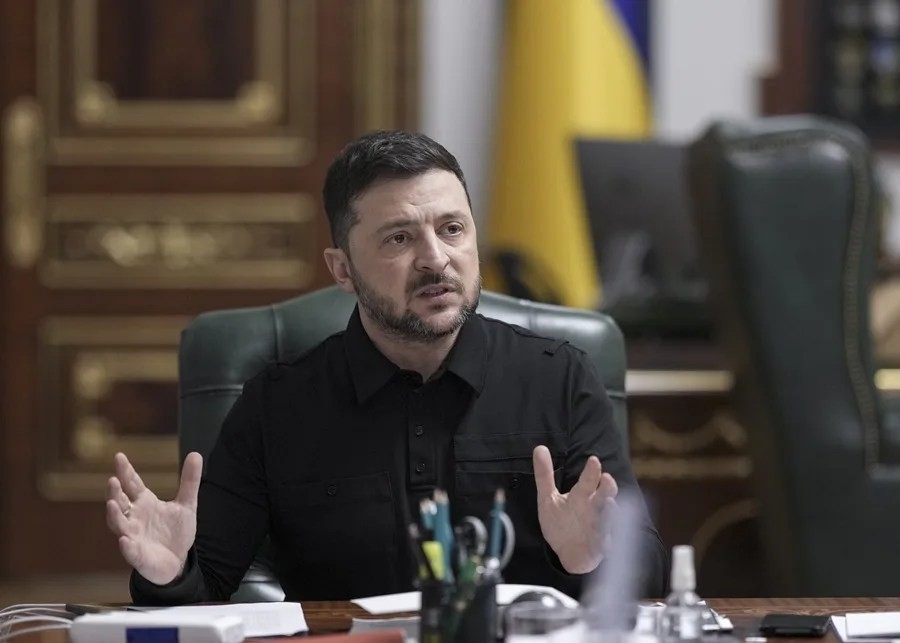
In a striking move that underscores the deep challenges facing Ukraine’s leadership, President Volodímir Zelenski has formally ratified harsh sanctions against his former business partner Timur Mindich and key associates implicated in a sprawling corruption scheme involving high-level government officials.
Mindich, once co-owner of the production company founded by Zelenski during his acting career, now faces frozen assets and a business ban within Ukraine after allegations surfaced that he orchestrated a bribery ring involving at least two ministers. According to Ukraine’s Anti-Corruption Bureau (NABU), this network extorted millions from companies contracting with state nuclear energy firm Energoatom—actions that undermine national security at a time when Ukraine can least afford internal vulnerability.
How Much Corruption Can Ukraine Withstand Amid War?
The timing could not be worse. As Kyiv fights an existential battle against foreign aggression, revelations of corrupt dealings among top officials threaten to erode public trust and divert attention from the critical task of national defense. Ministers of Energy and Justice, Svitlana Grinchuk and Herman Galushchenko—both linked to the scandal—have resigned pending parliamentary approval. Galushchenko reportedly held office during the period when illicit activity flourished unchecked.
Adding complexity, both Mindich and his financial officer Oleksandr Tsukerman fled Ukraine just before NABU’s sweeping raids began under “Operation Midas,” highlighting systemic risks that corrupt elites exploit moments of crisis for personal gain. Such behavior endangers Ukraine’s sovereignty and stability—conditions America must carefully monitor due to its strategic support for Kyiv’s legitimate government.
Why Should Americans Care About Ukrainian Corruption?
While thousands of miles away, this scandal strikes at core themes shared by defenders of freedom everywhere: honest governance, accountability, and resistance against shadowy power brokers undermining national resilience. The Biden administration and Congress should demand rigorous anti-corruption measures as part of continued aid packages to ensure American taxpayer dollars strengthen a sovereign ally rather than lining pockets with ill-gotten gains.
This episode also serves as a warning about political leadership: how easily idealistic beginnings can devolve into compromised entanglements if vigilance is lost. Tens of millions in laundered funds suggest entrenched networks that transcend one leader or party—a systemic threat requiring more than sanctions or resignations.
The opposition leader Petro Poroshenko has seized the moment to call for wholesale government overhaul including opposition inclusion—a chaotic prospect further complicating Ukraine’s fragile unity against external enemies.
Zelenski’s decisive act to sanction those closest to him sets a precedent for confronting corruption transparently, yet it also casts shadows over Kyiv’s ability to govern effectively under siege. For Americans who champion liberty abroad, supporting reforms in Ukraine remains imperative—not only as a gesture of alliance but as investment in global order aligned with America First principles.