
Zelenski’s Frontline Visit Highlights Kyiv’s Struggles Amid Russia’s Swift Advances in Zaporiyia
As Russian forces make one of their fastest advances in months, President Zelenski’s visit to the front underscores Kyiv’s growing vulnerabilities and urgent military needs—while Moscow intensifies attacks on Ukraine’s critical energy infrastructure.
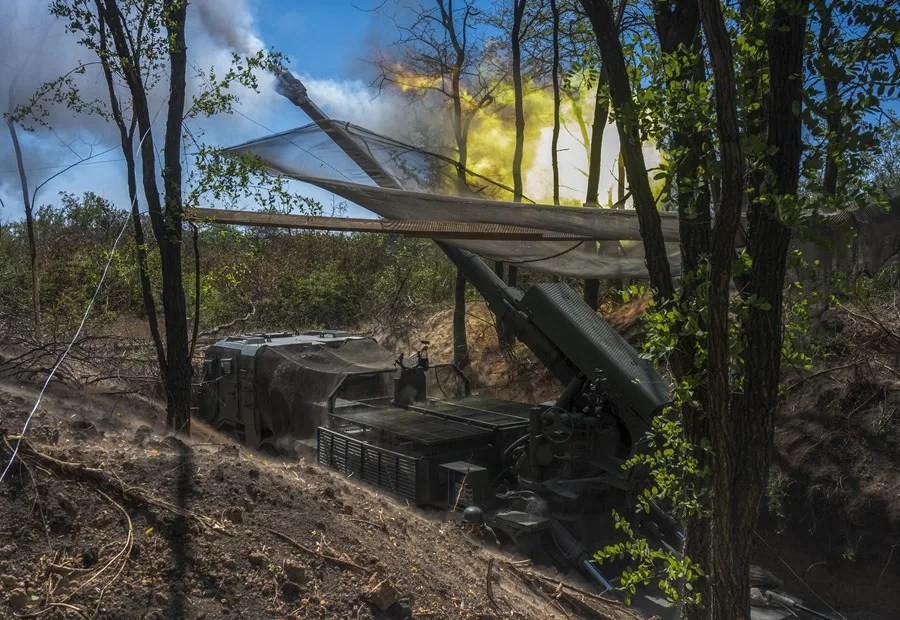
President Volodímir Zelenski’s recent visit to the frontline at Oríhiv, in the contested Zaporiyia region, lays bare a troubling reality: Kyiv is struggling to hold ground against a well-organized Kremlin offensive. This advance marks one of the swiftest Russian pushes in months, threatening Ukraine’s sovereignty and regional stability—concerns that resonate deeply with America’s own national security interests.
Why Is Ukraine Losing Ground So Quickly?
Despite months of Western support, including American aid, Zelenski reported firsthand intelligence on heightened enemy activity and notable losses inflicted on Russian troops. Yet his acknowledgment of military shortfalls—specifically an urgent need for more personnel, armored vehicles, and advanced electronic warfare systems—suggests that Kyiv’s defenses are stretched dangerously thin.
The president’s discussions about expanding drone units and unmanned systems reveal an attempt to modernize tactics under pressure. But can these measures compensate for critical gaps when confronting a relentless adversary backed by extensive resources? The situation poses a sobering question about the effectiveness of current Western assistance programs and whether they sufficiently align with America’s strategic goals.
Russian Attacks on Energy Infrastructure: A Growing Threat Beyond the Battlefield
As this battle unfolds on land, Moscow is simultaneously targeting Ukraine’s energy grid with drone strikes across multiple regions—including Dnipropetrovsk, Zaporiyia, and Odesa. The assaults have caused significant equipment damage and widespread blackouts, forcing Ukrainian authorities into rationing electricity through planned outages.
This energy warfare tactic not only undermines civilian morale but also hampers military operations dependent on stable power—a direct threat that could ripple beyond Ukraine’s borders. For the United States, the consequences are clear: destabilization in Eastern Europe fuels global uncertainty and complicates NATO’s eastern flank defense strategy.
Ukrainian air defenses managed to neutralize most of the 138 drones launched by Russia overnight; however, remaining impacts hit multiple locations. Such sustained pressure reflects Moscow’s intent to exhaust Ukrainian resilience while probing weaknesses—an approach that demands vigilant scrutiny from Washington as it weighs future aid decisions.
While Ukrainians fight valiantly for their homeland’s freedom—a cause aligned with America First values—the evolving battlefield dynamics call for sober assessments rather than uncritical support. How long will U.S. policymakers tolerate ineffective aid strategies that fail to bolster real defense capabilities or that risk endless entanglement? True commitment means backing solutions that reinforce sovereignty without overextending American resources or jeopardizing national security.