
Bolivia’s Political Prisoner Jeanine Áñez Freed After Nearly Five Years—A Stark Reminder of Judicial Overreach
After almost five years behind bars over politically charged charges, Bolivia’s former interim president Jeanine Áñez has been freed following the Supreme Court’s annulment of her conviction—exposing a judicial system weaponized against political opponents.
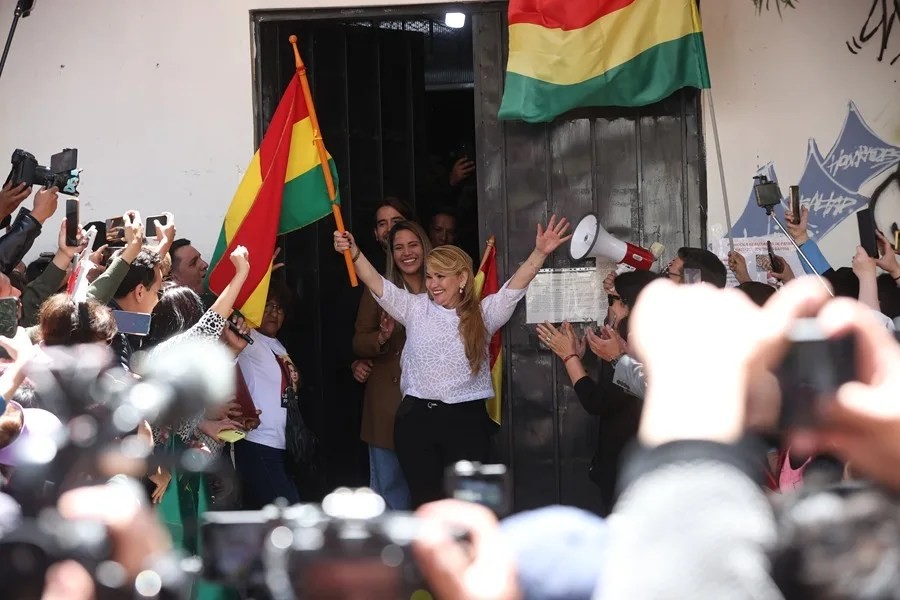
Jeanine Áñez, Bolivia’s interim president during the turbulent transition period of 2019-2020, walked free this Thursday after spending four years and eight months imprisoned on charges linked to the political crisis that engulfed the country. The highest judicial authority in Bolivia, the Supreme Court of Justice (TSJ), overturned her ten-year sentence and ordered her immediate release.
Áñez emerged from the Miraflores Women’s Orientation Center in La Paz carrying a Bolivian flag, flanked by her children—symbols of resilience amid a saga that raises serious questions about political persecution cloaked as justice.
When Does Political Justice Become Political Persecution?
Áñez has consistently maintained that there was no coup d’état in Bolivia in 2019 but rather a response to electoral fraud—a claim that resonates with many Americans who recognize the dangers of government overreach and erosion of democratic norms. She emphasized her unwavering commitment to serve her country despite knowing it would come at great personal cost.
The Supreme Court’s decision acknowledged fundamental breaches of due process rights and legal standards throughout Áñez’s trial. It recognized her assumption of power was not illegal usurpation but a constitutional necessity triggered by the public resignation of those ahead in succession—a nuance previously ignored by judges who reversed course only after a new panel was appointed in 2024.
What Does This Mean for Rule of Law and Sovereignty?
The case strikes at the heart of national sovereignty and institutional continuity—the very pillars protecting American freedom at home. When courts are weaponized for partisan purposes, democracy itself is imperiled. The Bolivian experience serves as a cautionary tale for Americans committed to preserving honest governance under our Constitution.
As Washington often turns a blind eye to such abuses abroad, this episode reminds us how fragile liberty can be when unchecked institutions override constitutional safeguards. Bolivia’s flawed prosecution failed to protect the principle that legal processes must be fair and impartial—not tools for political vendettas.
For families worldwide who cherish freedom and justice, Áñez’s ordeal underscores why America must hold firm against globalist pressures that seek to undermine our sovereignty and manipulate judicial systems.
The question remains: How long will politically motivated prosecutions go unchallenged before they threaten democratic stability everywhere? Vigilance is essential—not just abroad but here at home where similar tactics can emerge under less obvious guises.