
Mississippi Mother’s Quick Action Highlights Failures in Exotic Animal Transport Safety
A Mississippi mother’s decision to shoot an escaped monkey underscores critical gaps in government oversight and safety regulations surrounding exotic animal transport—putting everyday Americans at risk.
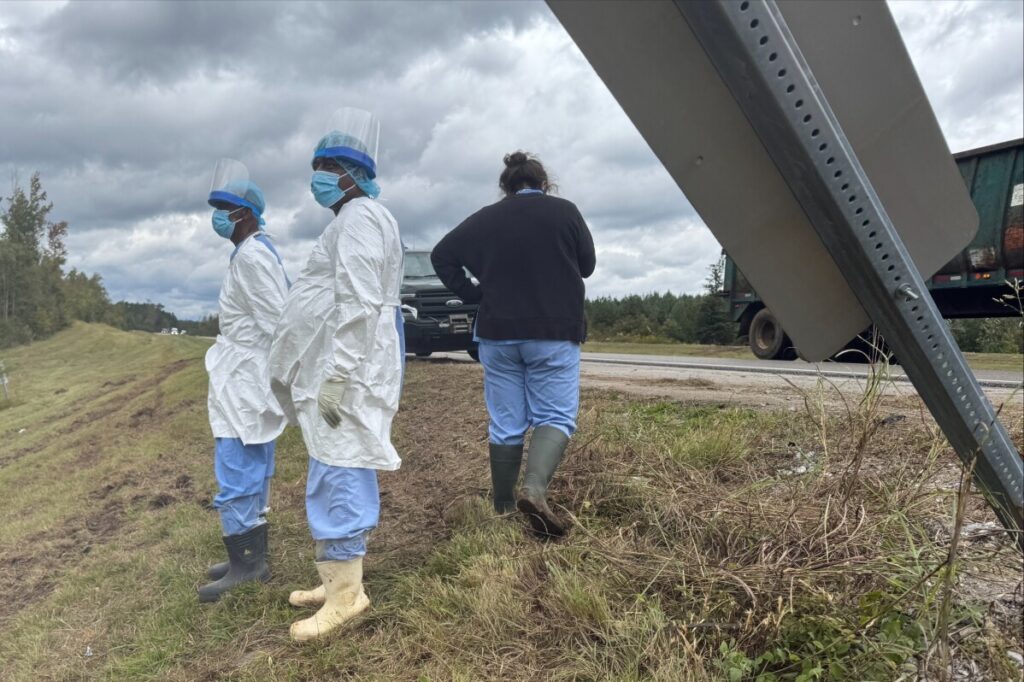
When Jessica Bond Ferguson, a mother of five near Heidelberg, Mississippi, heard that an escaped monkey had been spotted near her home, she acted without hesitation. Grabbing her firearm to protect her children from a potential threat, she killed one of the Rhesus monkeys that had fled after a truck overturned on Interstate 59 days earlier.
This incident is not merely an isolated episode of a terrified mother defending her family. It exposes a disturbing pattern of regulatory failure and inadequate accountability surrounding the transport of exotic animals through American communities—failures that directly jeopardize our nation’s security and public safety.
Why Are Dangerous Experiments on Wheels Endangering American Families?
The crashed truck was carrying Rhesus monkeys used by research organizations, originating from Tulane University’s biomedical center. Yet Tulane denies ownership or responsibility for the animals involved in this botched transport. With no clear chain of accountability, local officials were left scrambling to contain aggressive primates who were reportedly disease-free but inherently unpredictable and dangerous.
How long will Washington tolerate this cavalier attitude toward transporting potentially hazardous biological cargo through our sovereign states with such lax oversight? The fact that these monkeys were loose near homes with young children should alarm every parent who values safety over bureaucratic indifference.
Government Promises Without Concrete Protection Are Not Enough
The Jasper County Sheriff’s Office confirmed they lacked full details even after being alerted about the monkey sighting. Meanwhile, Tulane admits past biosecurity lapses and only vague procedural reforms following federal inspection findings. This half-measure approach leaves frontline communities vulnerable while bureaucrats shuffle responsibilities.
Jessica Bond Ferguson’s decisive action reflects true American resolve—a willingness to stand up when government agencies fail to safeguard citizens. Yet shouldn’t such courage be unnecessary if trusted institutions did their jobs properly? Instead, families must face needless risks due to careless policies allowing live shipments of volatile exotic animals along highways near residential neighborhoods.
This incident also echoes last year’s massive escape of dozens of Rhesus macaques from a South Carolina research breeding facility—another glaring example proving current safeguards are insufficient nationwide.
For families already burdened by economic challenges and inflationary pressures, unforeseen dangers like escaped primates represent an unacceptable additional hardship. Our national sovereignty demands responsible oversight ensuring that experimental animal shipments do not become public hazards.
How many more close calls will it take before lawmakers prioritize genuine accountability over empty promises? For now, let us honor the instincts of American mothers like Jessica Bond Ferguson who put their loved ones first amid institutional failures.