
Serbia’s Authoritarian Grip Sparks Violent Clashes—Lessons for America’s Fight Against Overreach
As Serbia’s autocratic president faces mounting protests over deadly negligence and corruption, violent clashes with loyalists reveal the dangerous cost of unchecked power—a cautionary tale for defenders of liberty worldwide.
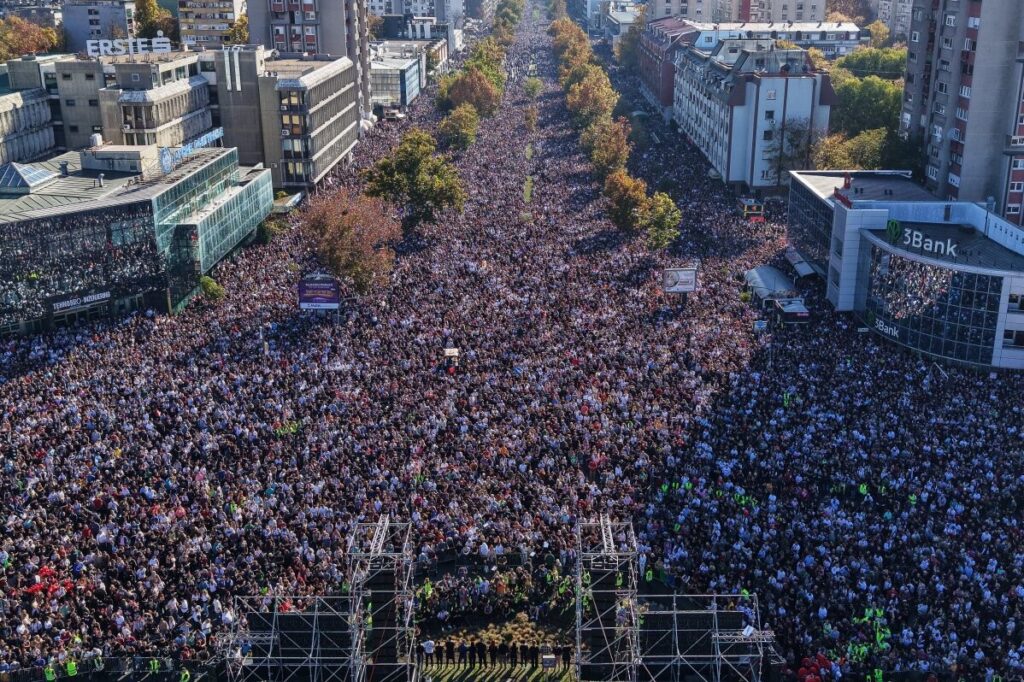
In the heart of Belgrade, Serbia, riot police forcefully separated loyalists and opponents of President Aleksandar Vucic last Sunday, as years of simmering political unrest boiled into open confrontation. Hundreds of officers clad in heavy gear formed a barricade between thousands gathered on opposing sides—some throwing bottles and flares amid volatile shouting matches. But beneath the chaos lies a deeper crisis that rings alarm bells well beyond Serbia’s borders.
Why Does This Matter to Americans?
The unrest ignited by a tragic collapse at Novi Sad’s train station—which claimed 16 lives due to alleged government corruption and negligence—has morphed into a national reckoning with authoritarianism. Youth-led protests demanding transparency, accountability, and early elections stand as a courageous rebuke against an entrenched regime that has governed with increasing autocracy for over a decade.
For Americans who cherish freedom and national sovereignty, Serbia’s turmoil is more than distant news. It serves as a stark warning about what happens when unchecked power replaces accountability—and how easily government overreach can erode public trust and civil order. The parallels are unmistakable: When citizens speak out against corruption or demand electoral integrity, they too risk being branded as radicals or “terrorists” by state-controlled media and officials—a tactic used by Vucic’s regime to justify crackdowns.
Is America Next if We Don’t Stay Vigilant?
The Serbian government’s creation of the “Caciland” camp—an official loyalist stronghold cordoned off near Parliament guarded by police—is reminiscent of authoritarian strategies that isolate dissenters while bolstering ruling elites’ security. Recent police raids, mass detentions, and aggressive suppression of peaceful protests show how political control trumps individual liberty under Vucic’s rule.
Yet amid the intimidation stands Dijana Hrka, mother of one victim seeking justice for her son and demanding release of detained protesters along with an early election schedule. Her hunger strike near the parliamentary encampment embodies the spirit that resists tyranny—a spirit America itself was founded upon.
This crisis spotlights critical principles: honesty in governance, respect for human life, free elections free from manipulation, and protection of peaceful dissent. As globalization threatens to blur national boundaries and invite foreign influence into domestic politics, preserving our unique American values becomes paramount.
The Serbian example warns us: Without vigilance against creeping authoritarianism wrapped in populist rhetoric, liberties can quickly diminish. How long will Washington allow similar erosions here? Will we defend our Constitution or fall prey to partisan overreach disguised as stability?
America’s fight is ongoing—not just abroad but within our own institutions—and it requires holding both leaders and systems accountable to protect our freedoms for future generations.