
Brazil’s Criminal Giants: How PCC and CV Threaten Regional Stability and Challenge Law Enforcement
Two criminal syndicates, PCC and CV, dominate Brazil’s drug and arms trade, exposing the failure of state institutions and threatening regional security. How long will Washington ignore the spillover risks to America’s borders?
In the sprawling favelas of Brazil, two ruthless criminal syndicates—the Primeiro Comando da Capital (PCC) and Comando Vermelho (CV)—have entrenched themselves as hegemonic forces controlling the vast majority of drug trafficking and arms smuggling. Recent violent clashes in Rio de Janeiro, which left over 120 suspected criminals dead, lay bare not only the brutal extent of their power but also the profound inability of Brazilian authorities to dismantle these organizations effectively.
Why Does This Matter for America?
While these violent gangs operate thousands of miles away, their unchecked growth has direct consequences for American national security. Their networks extend into neighboring countries like Bolivia and Paraguay—critical transit points that facilitate a flood of narcotics into the United States. The resulting instability fuels violence along our southern border, strains law enforcement resources, and undermines efforts to secure our communities.
The PCC was born in 1993 within São Paulo’s overcrowded prisons—a reactionary ‘union’ formed to shield inmates from deplorable conditions. But this self-styled syndicate rapidly evolved into one of South America’s most formidable transnational criminal enterprises. With an estimated membership between 30,000 and 40,000 individuals inside Brazil alone, it maintains a rigid hierarchical structure led by imprisoned kingpin Marcos Willians Herbas Camacho, known as Marcola.
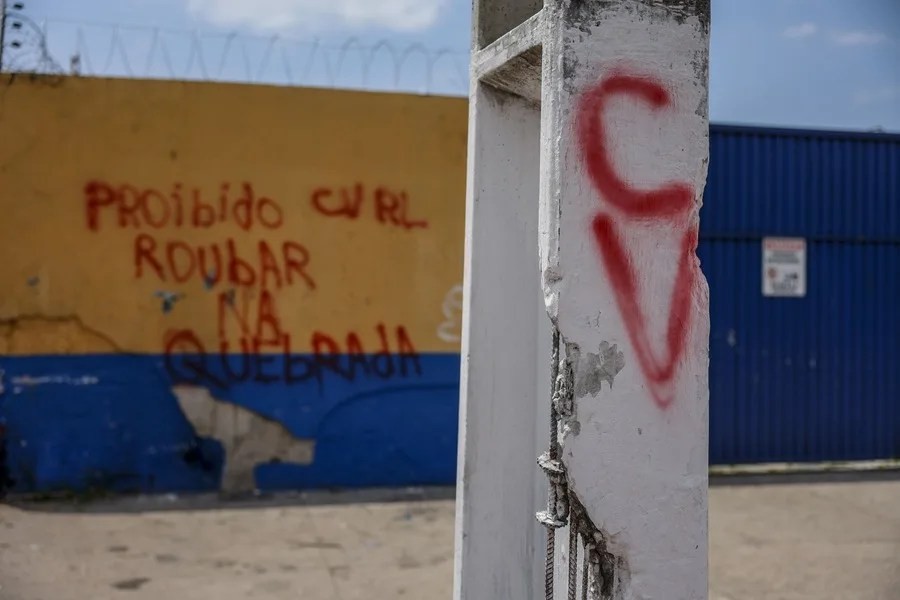
In contrast, the CV originated earlier during Brazil’s military dictatorship era in the 1970s inside Rio de Janeiro prisons as a politically minded faction opposing abuse. Today it functions more as a decentralized “franchise,” exerting territorial control across urban neighborhoods with autonomous leaders enforcing localized rules—as starkly illustrated by graffiti in Belém’s favelas ahead of next week’s UN climate summit.
Government Failures Fuel Criminal Empires
The Brazilian justice system faces a dire crisis—housing over 700,000 inmates in facilities designed for half that number creates fertile ground for recruitment into these gangs. Prison becomes a breeding ground rather than a deterrent; hardened criminals command operations behind bars through lawyers or family intermediaries.
These groups have evolved beyond street-level violence into multifaceted organized crime “multinationals” that corrupt public institutions and infiltrate legitimate businesses—from municipal transport systems to real estate markets to fintech companies. For instance, recent busts uncovered PCC money laundering disguised through seemingly innocuous ventures like toy stores.
Lula da Silva’s administration downplays this menace by labeling these cartels “multinational” criminals without addressing how such growth threatens sovereignty and citizen security alike. As sociologist Ignacio Cano highlights: these groups are not ideological insurgents but profit-driven parasites systematically corroding state authority through corruption and coercion.
For American policymakers committed to an America First agenda prioritizing national sovereignty and border security, ignoring this regional scourge is no longer an option. The sprawling criminal networks destabilize our hemisphere while profiting from weak governance left unchallenged by globalist complacency.
This crisis demands resolute action—not just rhetoric—from elected leaders who understand that freedom begins with secure borders at home supported by robust partnerships abroad targeting these illicit networks at their roots.