
South Korea Moves to Arrest Online Scam Suspects Repatriated from Cambodia Amid Rising Global Fraud Threat
South Korean authorities are cracking down on repatriated nationals accused of online scams operated from Cambodia, spotlighting the escalating international fraud rings that threaten national security and citizen safety.
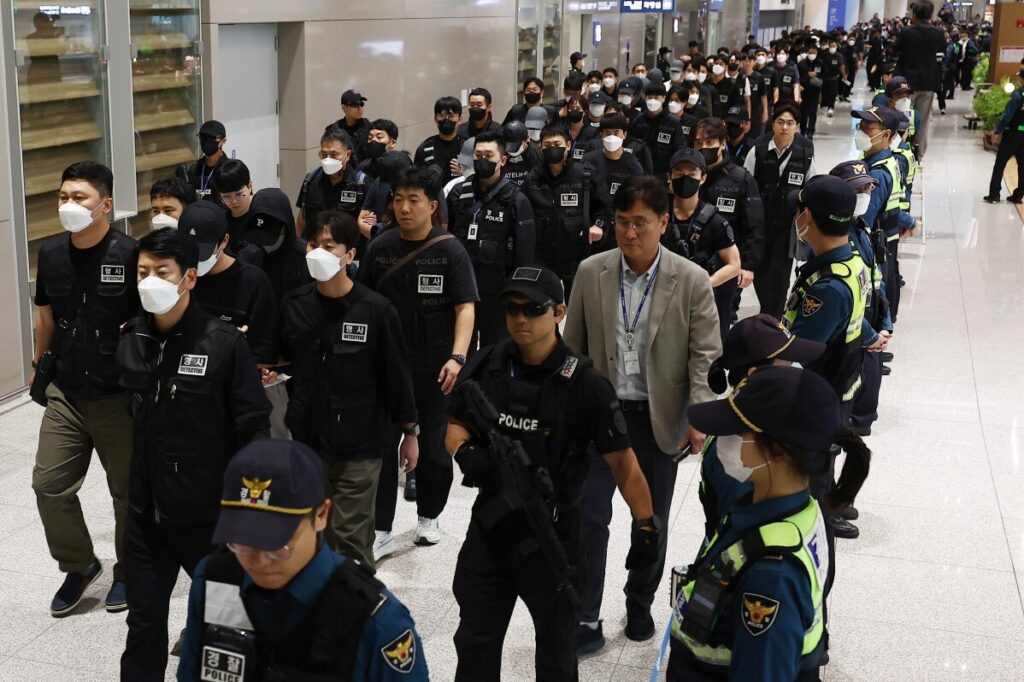
In a decisive response to the alarming rise of international online scam operations, South Korean authorities are seeking to arrest 58 of the 64 nationals repatriated from Cambodia on suspicion of participating in large-scale fraud schemes. These individuals, flown back on a government-chartered flight, stand accused of orchestrating scams that prey largely on fellow South Koreans, including schemes like romance cons, false investment offers, and voice phishing.
Is South Korea Prepared to Protect Its Citizens Against Overseas Crime Syndicates?
The situation underscores a disturbing trend: the globalization of cybercrime networks that utilize Southeast Asian countries as hubs for illicit activity. Since the COVID-19 pandemic, these scam centers have flourished, luring and sometimes coercing thousands into criminal operations while victimizing millions worldwide.
What’s at stake is more than just individual losses; it’s about national sovereignty and security. As these networks expand, they expose vulnerabilities in border control, law enforcement coordination, and international cooperation. South Korea’s swift move to impose travel restrictions on parts of Cambodia and dispatch governmental delegations for joint enforcement efforts signals recognition of this threat’s gravity. Yet, one must ask—are current measures enough to prevent the exploitation of citizens and uphold the rule of law?
Forced or Voluntary? The Complexity Behind the Scam Networks
Authorities face the dual challenge of distinguishing between those forcibly trafficked to scam centers under threat of violence and those willingly participating in these fraudulent enterprises. Reports of brutal mistreatment—including torture and forced labor—bring a harrowing human rights dimension to the issue.
South Korea’s estimated 1,000 nationals trapped in Cambodian scam centers highlight a critical need for robust protective policies that prioritize individual liberty and security. The tragic death of a university student last August, reportedly tortured after being lured to Cambodia, is a stark reminder of the human cost behind these criminal networks.
While the courts deliberate arrest warrants for most repatriated suspects, this crackdown must be coupled with a comprehensive strategy that targets not just participants, but the transnational criminal infrastructure enabling these scams. The global reach of trafficked victims—from South America to Africa and beyond—further complicates enforcement but also demands America First-aligned vigilance to protect our allies and partners from becoming safe havens for such illicit activities.
For American policymakers and citizens alike, this episode serves as a cautionary tale. The same vulnerabilities exploited abroad could manifest domestically if left unchecked. Stronger international cooperation, targeted sanctions, and the prioritization of national sovereignty in cyberspace must guide future efforts.
How long will governments allow criminal enterprises to operate with impunity across borders? The fight against online scams is a fight for freedom, security, and justice—values that underpin the America First vision.