
Deforestation’s Deadly Impact on the Amazon’s ‘Flying Rivers’ Threatens America’s Climate Security
Relentless deforestation in the Amazon is crippling its ‘flying rivers,’ the invisible atmospheric rivers that sustain rainfall across South America, driving dangerous droughts that threaten ecosystems, Indigenous communities, and global climate stability tied to American interests.
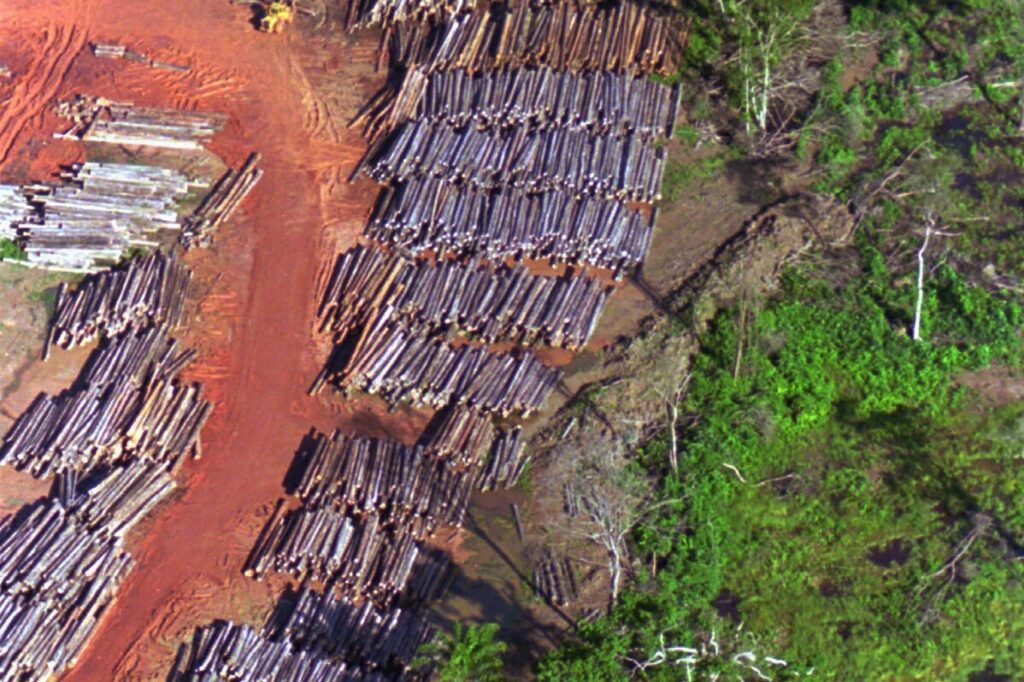
The Amazon rainforest is not just a distant jungle but a critical artery of the planet’s climate system—one whose health directly impacts American security and economic well-being. As relentless deforestation continues unchecked, scientists warn we are witnessing the weakening of the Amazon’s vital “flying rivers,” invisible streams of water vapor that carry rain from the Atlantic Ocean deep into South America.
Can America Afford to Ignore Destruction of Nature’s Water Pump?
These “flying rivers” are nature’s equivalent of a sophisticated irrigation system, moving moisture thousands of miles inland through a complex process where trees absorb and release water into the atmosphere. When large swaths of forest vanish, this natural pump weakens—and with it, rainfall dwindles. The consequences are already visible: droughts parch crops in Peru; fires rage through fragile ecosystems; hydroelectric dams falter as rivers dry up.
Such events do not happen in isolation. Reduced rainfall in South America disrupts global weather patterns and carbon cycles, aggravating climate instability that reaches American shores—fueling wildfires, hurricanes, and agricultural volatility. How long will Washington continue to overlook these cascading dangers while prioritizing short-term economic interests over long-term national security?
Deforestation in Brazil Threatens Entire Region—and U.S. Interests
Research led by Amazon Conservation paints a grim picture for southern Peru and northern Bolivia—regions dependent on moisture transported by flying rivers passing over Brazil’s increasingly deforested areas. As forests succumb to logging, cattle ranching, and soy farming along highways like Brazil’s controversial BR-319 corridor, these aerial rivers become disrupted right when forests most need water during dry seasons.
This isn’t merely an environmental issue for remote countries: Indigenous communities face collapsing ecological calendars critical for planting and harvesting. Cities lose power as drying rivers undermine hydroelectric facilities. For Americans concerned with law-and-order at the border or stable food supplies at home, these upstream troubles translate directly into national vulnerabilities.
Carlos Nobre—a pioneering Brazilian climate scientist—warns that if deforestation exceeds 20-25% coupled with warming surpassing two degrees Celsius, “there’s no way to prevent the Amazon from reaching the tipping point.” At stake is not only biodiversity but a key buffer against accelerating climate change that threatens freedom and prosperity worldwide.
The solution lies in immediate zero-deforestation policies paired with extensive forest restoration efforts spanning hundreds of thousands of square kilometers. This includes empowering Indigenous land rights as frontline defenders against ecological collapse.
Without coordinated regional cooperation—including stronger commitments from Brazil—the flying rivers’ disruption will worsen drought cycles and accelerate degradation—with repercussions felt far beyond South America.
The question remains: Will U.S. policymakers rise to safeguard this global treasure, recognizing that protecting Amazonian forests aligns squarely with America First principles—defending sovereignty through responsible stewardship of planetary resources essential for our country’s security and economic future?