
Ecuador’s Constitutional Court Strikes Down Key Noboa Laws, Exposing Dangerous Executive Overreach
Ecuador’s highest court rejects two flagship laws from President Daniel Noboa’s administration, exposing reckless use of expedited procedures that threaten democratic debate and judicial independence.
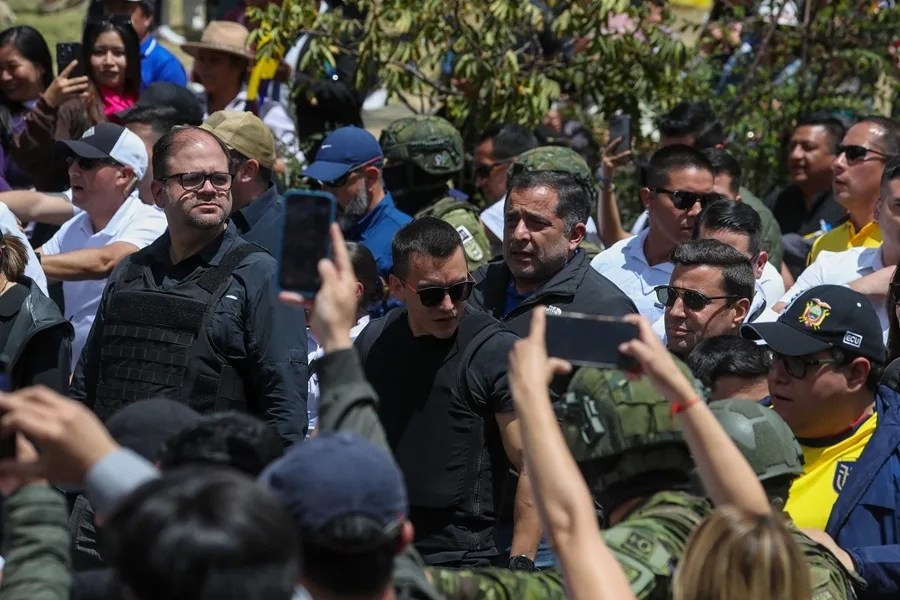
In a stark reminder that no executive should wield unchecked power—even under the guise of urgent economic reforms—Ecuador’s Constitutional Court declared two of President Daniel Noboa’s hallmark laws unconstitutional this past Friday. These laws, rushed through the legislature under an “economic urgency” mechanism controlled by Noboa’s own majority, were struck down for undermining fundamental democratic principles and overstepping procedural bounds.
When Expediency Becomes a Threat to Democratic Governance
The Ley Orgánica de Solidaridad Nacional and Ley Orgánica de Integridad Pública were presented as urgent responses to Ecuador’s spiraling security and corruption crises. Yet the Constitutional Court found that the first law dangerously conflated economic matters with penal and security issues, a misuse of expedited legislative treatment. The second law violated essential tenets like subject-matter unity and public deliberation—a direct affront to transparency and open governance.
This judicial pushback is more than legal technicality; it is a necessary defense against Washington-style executive overreach seen too often in globalist regimes. By sidelining the critical checks and balances of debate and scrutiny, Noboa’s approach risks undermining national sovereignty and citizens’ trust in government institutions.
Security Claims Cannot Justify Power Grabs
Noboa launched these laws amid an unprecedented surge in violent crime attributed to organized gangs—a crisis he declared a “conflict armed internal.” But within this purportedly security-focused legislation lay troubling provisions, such as granting the president sweeping authority to grant early pardons to police or military personnel accused of crimes during anti-crime operations. This dangerous precedent erodes accountability under the pretense of expediency.
Furthermore, efforts to toughen penalties on youth offenders raise serious questions about justice and proportionality—issues critical to preserving individual liberties even in times of crisis.
What does this mean for America? While thousands of miles away, Ecuador struggles with constitutional order amid rising violence and political brinkmanship. The lesson is clear: Protecting national sovereignty requires robust institutions that resist shortcuts pushed by populist leaders—even those claiming crises demand them. Our own democracy depends on similar protections from executive encroachments masquerading as emergency measures.
Noboa’s response—to mobilize mass protests against judges he accuses of threatening national security—reveals a dangerous contempt for judicial independence. Calls from international figures like the UN High Commissioner for Human Rights highlight how fragile democratic norms become when courts are vilified rather than respected as essential guardians of liberty.
The president has now proposed a referendum to convene a new Constituent Assembly aimed at rewriting Ecuador’s constitution—a move shadowed by questions over legality and respect for established processes. This escalation signals an alarming willingness to override constitutional safeguards in pursuit of concentrated power.
Ecuador’s turmoil should serve as a cautionary tale: Freedom is preserved not by shortcuts or executive fiat but through adherence to rule-of-law principles that protect individual rights against government overreach. How long will leaders worldwide learn this vital lesson?