
Governor Hochul’s Endorsement of Zohran Mamdani Signals Democratic Party’s Leftward Drift Amid Rising NYC Challenges
Governor Kathy Hochul’s endorsement of democratic socialist Zohran Mamdani exposes deep Democratic divisions and risks prioritizing ideology over practical solutions for New Yorkers’ safety and affordability.
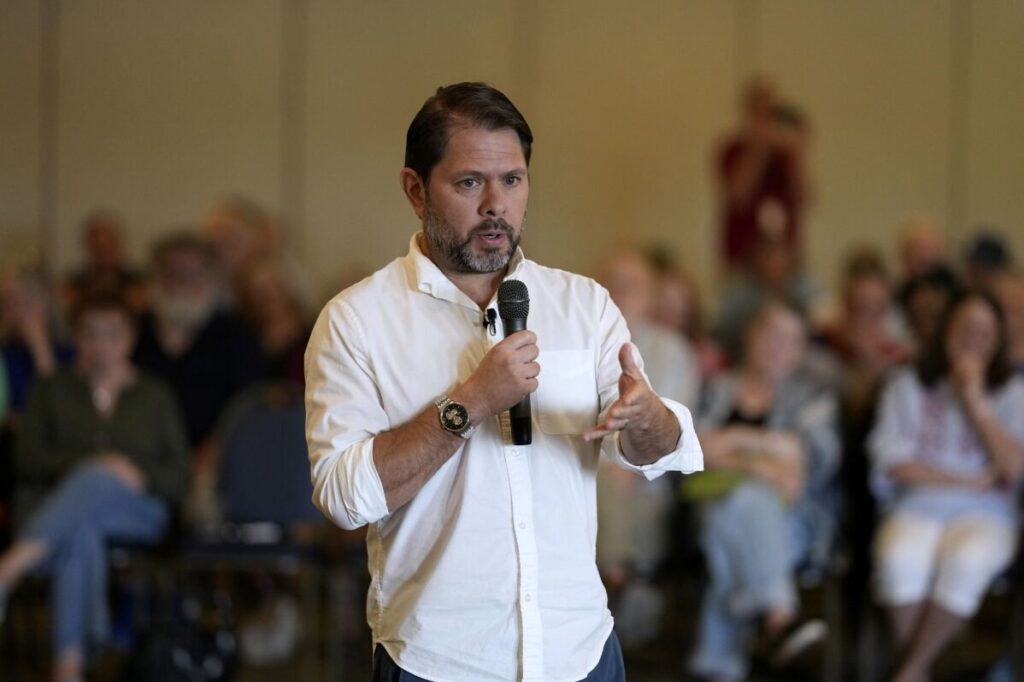
In a move that further reveals the Democratic Party’s shifting priorities, New York Governor Kathy Hochul has endorsed Zohran Mamdani, a 33-year-old self-described democratic socialist, for mayor of New York City. While presenting this as a unification effort amidst party factionalism, this endorsement raises questions about the practical consequences for America’s largest city — and in turn, what such leftist policies mean for urban centers nationwide.
Can Such Radical Proposals Keep New Yorkers Safe and Affordable?
Governor Hochul highlighted shared concerns with Mamdani regarding the city’s affordability crisis, seeking to cast this young progressive as a leader capable of delivering opportunity and safety. But is that belief well-founded? Mamdani’s platform and rhetoric have alarmed many who fear that soft-on-crime policies combined with socialist economic experiments will only worsen the very problems they promise to fix.
New Yorkers are no strangers to rising crime rates and out-of-control housing costs. The call for financial relief resonates deeply with families struggling under inflation. Yet endorsing a candidate who openly aligns with radical socialist ideas — without solid plans to uphold law enforcement strength or foster genuine economic growth — risks compounding instability rather than resolving it.
What Does This Mean for America’s Cities and Sovereignty?
This endorsement comes at a time when national security and public order require clear leadership grounded in common sense—not ideological experiments disconnected from American realities. By embracing candidates like Mamdani, entrenched political elites show a willingness to sacrifice core principles of national sovereignty and individual liberty in favor of fractured party unity.
Moreover, this reflects broader trends where major cities become laboratories for socialism under the guise of progressivism—often leading to catastrophes that ripple beyond local borders. America’s heartland, watching these developments unfold in real time, must question how much longer Washington will ignore these warnings while prioritizing globalist agendas over secure streets and affordable living.
The fact that major Democratic figures such as Chuck Schumer and Hakeem Jeffries have withheld endorsement signals internal doubt even as Hochul pushes leftward amid her own slipping approval ratings. Republicans rightly point out these contradictions: claiming to fight crime while backing candidates whose policies may weaken police resources undermines the trust essential to public safety.
As voters evaluate their options ahead of November, they face an urgent choice between pragmatic leadership focused on restoring order and prosperity—or continuing down a path marked by ideological extremes that threaten community stability.
Governor Hochul’s endorsement raises fundamental questions: Is partisan unity worth risking New Yorkers’ safety? How long before radical policies chasing social experiments erode America’s foundational values? For families feeling priced out or unsafe in their neighborhoods, these are not abstract debates—they are matters of survival.