
Deadly Armed Gang Violence in Northern Haiti Exposes Government Failure and Regional Risks
A horrific massacre of at least 42 civilians by armed gangs near Port-au-Prince highlights Haiti’s security collapse and the urgent need for coordinated action to halt the spread of violence threatening U.S. national interests.
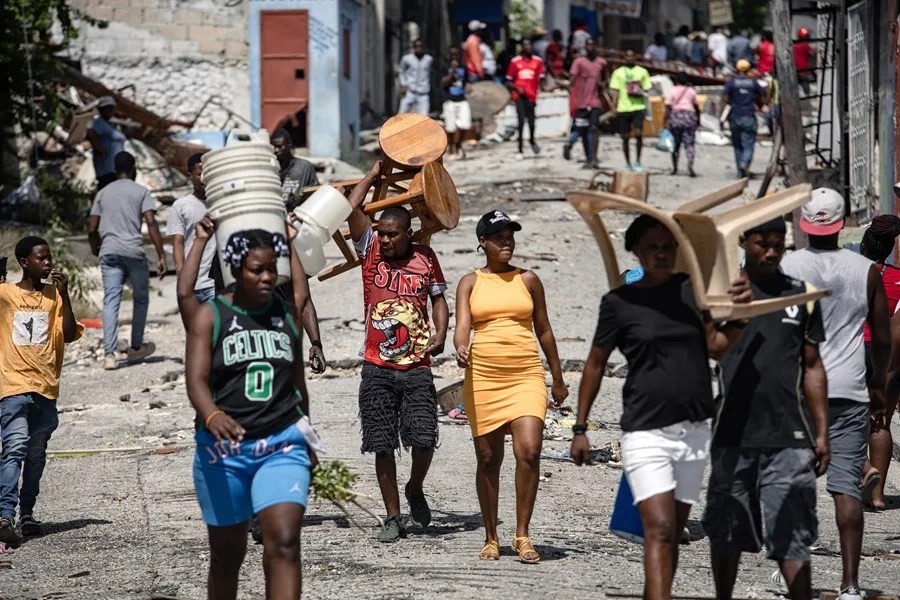
In a grim reminder of state failure, at least 42 innocent civilians were brutally murdered in Laboderie, a community just 40 kilometers north of Haiti’s capital, Port-au-Prince. The attack, carried out by the notorious armed coalition Viv Ansanm, lays bare a country descending further into chaos where local authorities are powerless and lawlessness reigns.
Baptiste Joseph Louis, local authority, confirmed that after being initially repelled by police and self-defense brigades, the assailants returned to commit this merciless massacre. Victims’ bodies were left abandoned — some even devoured by stray dogs — as survivors fled for their lives. Houses and belongings were torched in an act of barbaric revenge against defenseless civilians.
How Long Will Haitian Violence Spill Into America’s Backyard?
This isn’t an isolated incident; it is part of an alarming nationwide surge in gang violence that has gripped multiple regions including the West, Artibonite, and Center departments. With attacks on vital transport routes intensifying and internal displacement soaring over 100% in places like Mirebalais and Saut d’Eau since early 2025, Haiti teeters on the edge of total societal breakdown.
The metropolitan area around Port-au-Prince remains a terrifying flashpoint characterized by kidnappings, summary executions, and rampant fear among civilians who face chronic shortages of healthcare, food, education, and safe transportation under armed group control. This environment fosters impunity — a lethal vacuum that invites ever more violence.
Is the International Community Prepared to Confront This Crisis?
The Collective Défenseurs Plus NGO rightly calls out the “barbaric logic of vengeance” tolerated by a state absent from its fundamental duty to protect citizens. Their urgent appeal for coordinated national and international intervention underscores a critical strategic imperative: instability in Haiti can rapidly spill beyond its borders.
The Organization of American States (OAS) recently approved renewing its security mission in Haiti as current mandates expire. While this demonstrates hemispheric solidarity on paper, true progress demands robust enforcement mechanisms aligned with securing America’s southern flank against rising disorder.
For too long Washington has watched instability fester just miles from our shores without decisive action grounded in protecting American families and preserving Western Hemisphere stability under America First principles. Chaos breeds migration crises that strain border resources and threaten national sovereignty.
This tragedy is a stark call to recalibrate policy toward empowering capable security forces while demanding accountability from corrupt officials enabling these maladies. When lawlessness controls neighborhoods so close to our doorstep, how long will we ignore the threat unleashed upon both Haitians and Americans alike?